

What Is Polymer Thermal Degradation and Why It Matters
Imagine running a production line at full speed, only to discover that your finished parts are discolored, brittle, or emitting an unusual odor. The culprit? Heat-induced molecular damage that started long before any visible sign appeared. This invisible failure mode costs manufacturers millions annually in scrap, rework, and warranty claims, yet it remains one of the most misunderstood phenomena in plastics processing.
Defining Polymer Thermal Degradation
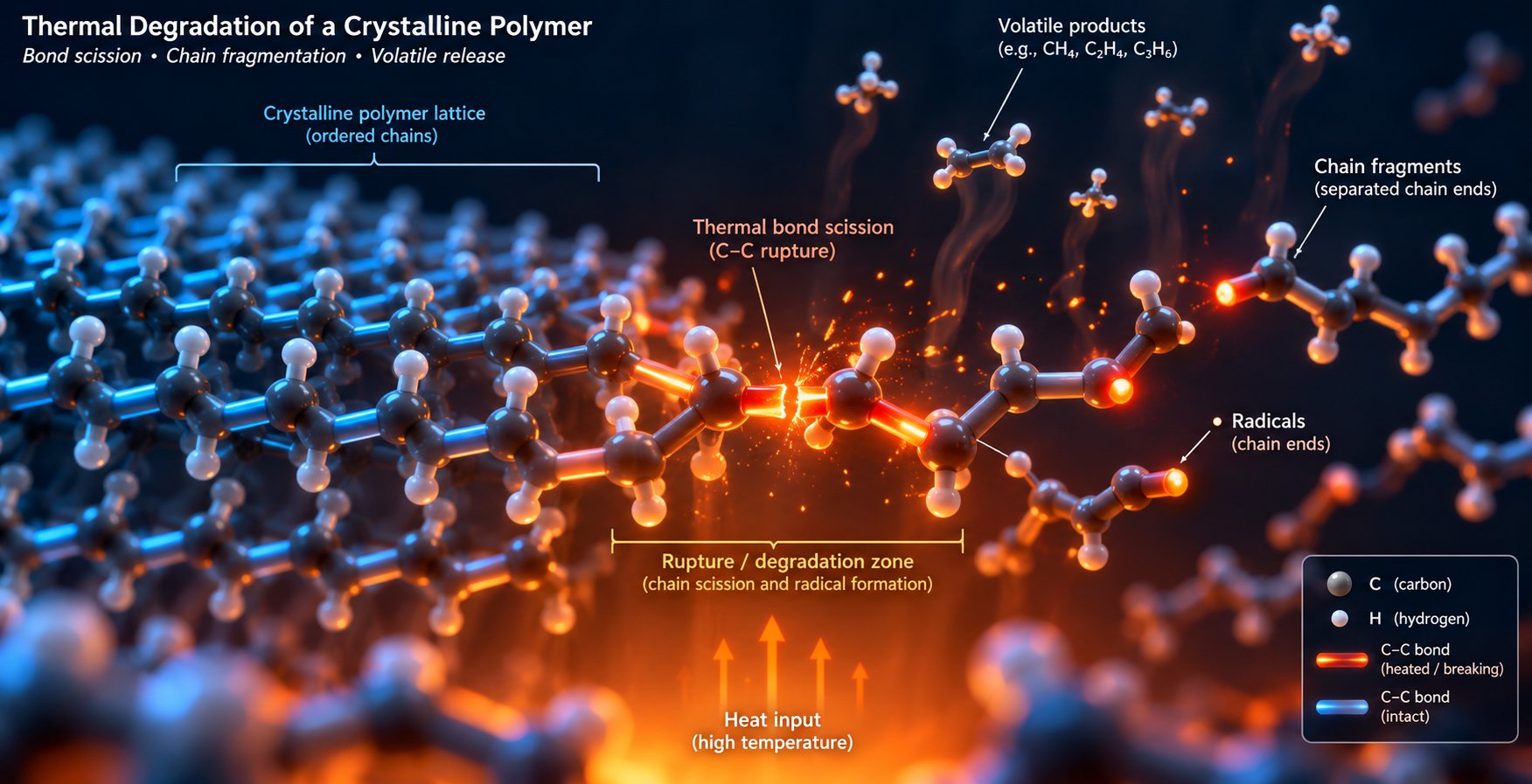
Polymer thermal degradation is far more than a material simply getting "too hot." It is a chemical event, not a physical one. When a polymer absorbs heat energy beyond its thermal stability threshold, covalent bonds along the molecular backbone or within pendant side groups begin to rupture. This bond-breaking triggers irreversible changes to the chain architecture, producing lower-molecular-weight fragments, gaseous volatiles, and altered functional groups that permanently compromise the material.
Polymer thermal degradation is the irreversible chemical change in a polymer's molecular structure caused by heat energy exceeding its stability threshold, resulting in loss of mechanical, optical, and chemical properties alongside the generation of volatile by-products.
This definition draws a critical distinction. When you heat a thermoplastic above its glass transition or melting temperature, the chains gain mobility and the material softens or flows. That is a reversible physical transition. Thermal decomposition, by contrast, severs the covalent bonds that hold the polymer together. Cool the material back down, and the damage remains. The molecular weight has dropped, new chemical species have formed, and the original performance envelope is gone. As research published in Molecules explains, these degradation-induced molecular variations include changes to chain length, dispersity, functional group composition, degree of branching, and crosslinking level, all of which translate directly into altered mechanical, thermal, and optical properties.
Why Thermal Stability Matters in Processing and End Use
Every polymer processor, material selector, and design engineer operates within a narrow window. On one side sits the temperature needed to melt or soften the resin enough for it to flow through a die, fill a mold, or bond to an adjacent layer. On the other side sits the onset of thermal decomposition, where molecular damage begins accumulating. This gap is called the processing-degradation window, and it varies enormously from one polymer to the next.
A degraded polymer tells its story through multiple symptoms:
- Mechanical strength drops as shorter chains entangle less effectively and load-bearing capacity diminishes.
- Color shifts, often yellowing or browning, signal the formation of conjugated unsaturations or oxidation products.
- Volatile emissions create odors, surface defects like bubbles or splay marks, and potential workplace safety concerns.
- Product safety risks emerge when degradation by-products migrate into food contact layers, medical devices, or sensitive electronic housings.
Processing parameters like melt temperature, residence time, shear rate, and even the atmosphere inside the barrel all influence whether a resin stays safely within its processing window or drifts into degradation territory. RheoSense notes that the onset of thermal degradation effectively dictates the maximum temperature at which a polymer can be used, making it a critical parameter during both manufacturing and end-use design.
Understanding polymer degradation and stability is therefore not an academic exercise reserved for polymer chemists. It is a practical necessity for anyone who selects, specifies, or processes plastics. The challenge is that most available resources either dive deep into reaction kinetics without connecting to the factory floor or offer superficial processing tips without explaining the underlying science.
This article bridges that gap. In the sections ahead, you'll find a clear walkthrough of the four primary degradation mechanisms, the key differences between purely thermal and thermo-oxidative pathways, a polymer-by-polymer reference of degradation temperatures, accessible explanations of degradation kinetics, guidance on TGA testing and interpretation, and actionable strategies for prevention through both stabilizer chemistry and equipment design. Whether you're troubleshooting a discolored extrudate or selecting a resin for a high-temperature application, the science that follows will give you the framework to make better decisions.
Four Primary Mechanisms of Thermal Degradation in Polymers
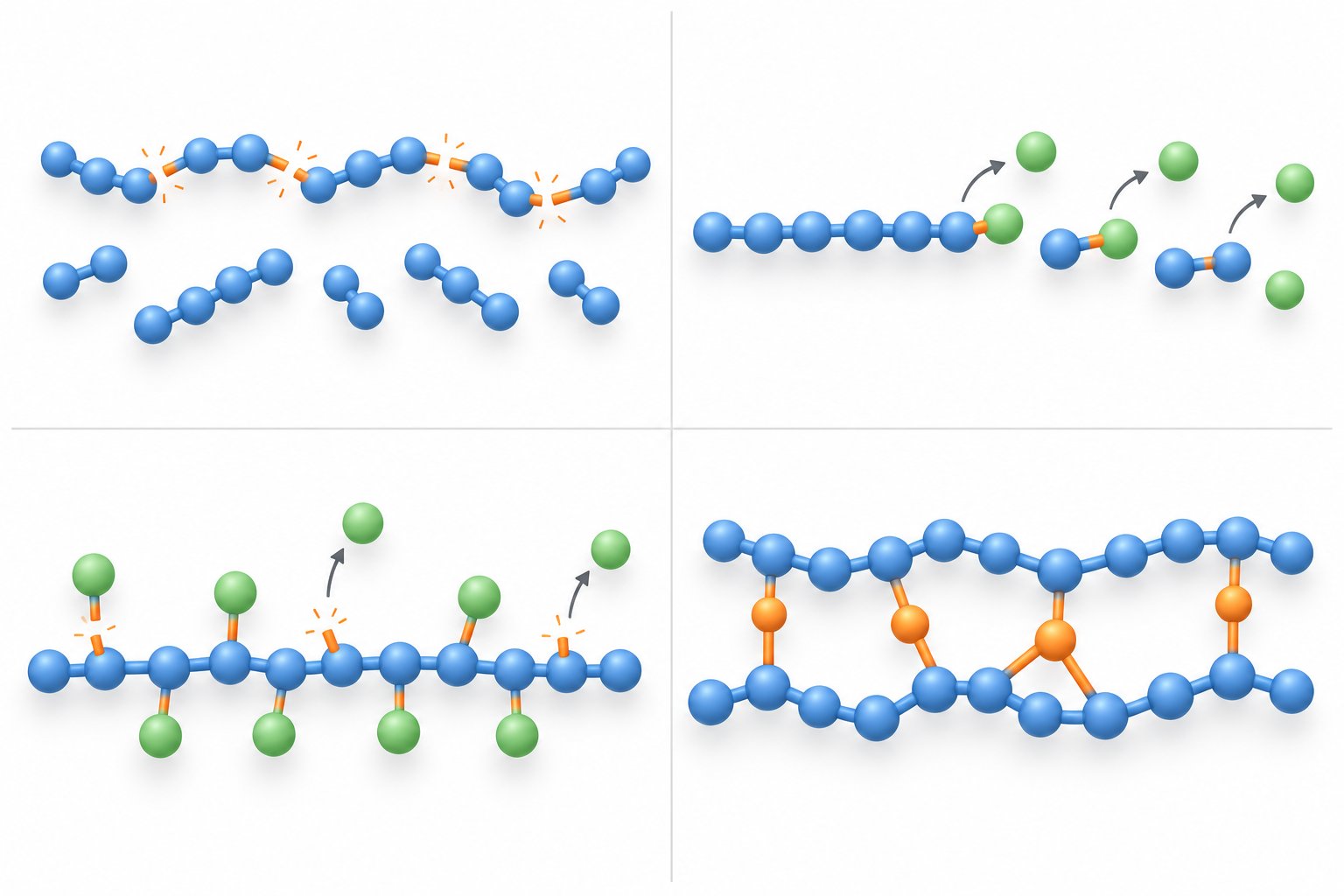
When heat pushes a polymer past its stability threshold, the molecular damage does not follow a single script. Depending on the polymer's backbone chemistry, side-group structure, and surrounding environment, the thermal degradation of polymers proceeds through one of four distinct mechanisms, or sometimes a combination of them. Understanding which mechanism dominates for a given resin is the first step toward predicting how it will fail, how fast it will fail, and what by-products it will release.
Random Chain Scission
Picture a long chain of paperclips connected end to end. Random chain scission is the equivalent of snipping that chain at arbitrary, unpredictable points along its length. Each cut produces two shorter fragments, and because the breaks are statistically distributed, you end up with a broad range of fragment sizes rather than any single well-defined product.
This mechanism dominates in polyolefins like polyethylene (PE) and polypropylene (PP). When these polymers absorb enough thermal energy, the C-C backbone bonds rupture at random positions. The immediate consequence is a rapid drop in molecular weight, often well before any visible change appears. You'll notice the material becoming progressively weaker, more brittle, and less resistant to stress cracking, because shorter chains entangle less effectively and transfer mechanical loads poorly.
A key characteristic of random scission is that it does not regenerate monomer in significant quantities. Instead, the fragments are oligomeric chains, waxes, and a complex mixture of hydrocarbons. This is precisely why pyrolysis of polyethylene yields fuel-grade oils rather than pure ethylene, a practical distinction that matters enormously for recycling strategy.
End-Chain Scission and Depolymerization
Some polymers degrade in a far more orderly fashion. Instead of breaking apart at random, they "unzip" from the chain end, peeling off one monomer unit at a time in a sequential reversal of the original polymerization reaction. Polymer scientists call this depolymerization or depropagation.
Poly(methyl methacrylate) (PMMA) is the textbook example. At elevated temperatures, PMMA can unzip almost completely back to methyl methacrylate monomer. Polystyrene (PS) also shows significant end-chain scission behavior, although its higher ceiling temperature makes the process less efficient and random scission competes more aggressively.
The driving concept here is the ceiling temperature (Tc). Every addition polymer has a thermodynamic threshold above which the rate of depolymerization exceeds the rate of propagation. As Jones et al. explain in the Journal of the American Chemical Society, when the Gibbs free energy change for polymerization becomes positive, depropagation is thermodynamically favored, and monomer is regenerated until a new equilibrium concentration is reached. Importantly, the ceiling temperature is not a fixed number. It depends on monomer concentration and polymer chain-end chemistry, meaning dilute solutions can depolymerize at temperatures well below commonly cited Tc values.
Why does one thermal polymer unzip while another fragments randomly? The answer lies in substituent effects. Polymers built from 1,1-disubstituted monomers, such as methacrylates, have more steric strain along the backbone, making depropagation energetically favorable. Monosubstituted chains like those in polyethylene are thermodynamically much more stable, so they resist unzipping and instead break at random points.
Chain Stripping and Side-Group Elimination
Not all degradation starts with backbone rupture. In certain polymers, pendant groups detach from the main chain before the backbone itself breaks. This mechanism, called chain stripping or side-group elimination, produces small-molecule volatiles while leaving behind a chemically altered backbone.
PVC (polyvinyl chloride) is the classic and most industrially significant example. When heated, PVC undergoes dehydrochlorination: hydrogen chloride (HCl) molecules split off from adjacent carbon atoms along the chain. As Akishima Chemical describes, this process proceeds as a "zipper reaction" where the loss of one HCl molecule activates the neighboring site, creating a cascade of elimination reactions along the chain. The result is the formation of conjugated polyene sequences, alternating double bonds that act as chromophores and cause the characteristic yellowing, then browning, and eventually blackening of degraded PVC.
The practical impact is twofold. First, the released HCl is corrosive and toxic, posing equipment corrosion and workplace safety concerns. Second, the altered backbone with its extended conjugation becomes increasingly rigid and brittle. This is why PVC processing demands specialized heat stabilizer systems, typically metal carboxylates based on calcium-zinc, barium-zinc, or organotin compounds, that scavenge free HCl and replace labile chlorine atoms before the zipper reaction can propagate.
Cross-Linking Reactions
While the first three mechanisms all involve breaking bonds, heat can also drive the formation of new bonds between neighboring polymer chains. These thermally induced cross-linking reactions create bridges that lock chains together into a three-dimensional network.
Sounds like it might improve the material? In practice, uncontrolled thermal cross-linking is almost always detrimental. The newly formed network restricts chain mobility, making the polymer increasingly rigid and brittle. You lose the ability to melt or reshape the material, and fracture toughness drops sharply. Rubbers and elastomers are particularly susceptible to this mode of degradation; prolonged heat exposure can cause them to harden, crack, and lose their elastic recovery entirely.
Cross-linking often competes with chain scission. In polyethylene, for instance, both reactions occur simultaneously, and the dominant mechanism depends on temperature, atmosphere, and the degree of branching. Linear high-density polyethylene tends more toward cross-linking, while highly branched low-density polyethylene favors scission. Recognizing which reaction wins is essential for predicting how a specific grade will behave under prolonged heat exposure.
Summary of All Four Mechanisms
The following table consolidates these four pathways into a quick-reference format, making it easier to match a polymer degradation stability concern to its most likely mechanism:
| Mechanism | Description | Dominant Polymer Examples | Primary Products |
|---|---|---|---|
| Random Chain Scission | Backbone bonds break at arbitrary positions, rapidly reducing molecular weight without regenerating monomer | Polyethylene (PE), Polypropylene (PP) | Oligomeric fragments, waxes, mixed hydrocarbons |
| End-Chain Scission (Depolymerization) | Monomer units peel off sequentially from chain ends in an "unzipping" reversal of polymerization | PMMA, Polystyrene (PS), Poly(alpha-methylstyrene) | Monomer (high yield for disubstituted polymers) |
| Chain Stripping (Side-Group Elimination) | Pendant groups detach from the backbone before backbone rupture, often via a zipper-like cascade | PVC (loss of HCl), Polyvinyl acetate (loss of acetic acid) | Small-molecule volatiles (HCl, acids), conjugated polyene backbone residue |
| Cross-Linking | New inter-chain covalent bonds form under heat, creating a rigid network that increases brittleness | Polyethylene (competing with scission), rubbers, certain elastomers | Insoluble gel fraction, embrittled network structure |
In real-world processing and service life, these mechanisms rarely operate in complete isolation. A polyolefin may simultaneously undergo random scission and cross-linking. A PVC compound may lose HCl through chain stripping while also experiencing backbone scission at elevated temperatures. The dominant pathway depends heavily on one critical variable that many engineers overlook: the atmosphere surrounding the polymer. Whether the material degrades in air or under inert conditions fundamentally reshapes the chemistry at play, the temperature at which damage begins, and the products that form.
Thermal vs Thermo-Oxidative Degradation Pathways
The atmosphere a polymer "breathes" during processing or service changes everything about how, when, and why its chains break apart. Two samples of the same resin, heated to the same temperature at the same rate, will degrade through entirely different chemical pathways depending on whether they sit in nitrogen or in air. This distinction between purely thermal and thermo-oxidative routes is one of the most practically significant, yet consistently underexplained, concepts in polymer thermal degradation science.
Purely Thermal Degradation in Inert Atmospheres
Strip away oxygen, and you isolate the polymer's intrinsic thermal stability. Under nitrogen, argon, or vacuum, degradation proceeds solely through thermolytic bond cleavage. Heat supplies enough energy to overcome the dissociation energy of specific covalent bonds, whether along the backbone or within side groups, and the chain fragments without any oxidative chemistry participating. This is the domain of pyrolysis.
In an inert environment, the onset temperature for measurable mass loss is typically higher than it would be in air for the same polymer. The product distribution also shifts. Without oxygen to intercept radical intermediates and steer them toward peroxides and carbonyl species, the volatile products tend to be simpler hydrocarbons, monomers (in unzipping polymers), or small fragments characteristic of the backbone chemistry alone.
Consider polyoxymethylene (POM) as a concrete example. Zhang et al. studied POM decomposition under both nitrogen and air using thermogravimetric analysis at multiple heating rates. In nitrogen, the onset degradation temperature reached 333-365 degrees C depending on heating rate, and the activation energy ranged from 151.0 to 156.6 kJ/mol. The degradation followed a single-step process driven purely by thermolytic chain unzipping into formaldehyde. Infrared analysis of the evolved gases confirmed the absence of oxidation products, instead detecting isocyanate groups and dehydration products at higher temperatures.
Thermo-Oxidative Degradation in Air
Introduce oxygen, and the degradation chemistry transforms dramatically. Thermo-oxidative degradation follows a self-accelerating radical chain mechanism known as the auto-oxidation cycle. Here is how it unfolds:
- Initiation: Heat generates carbon-centered radicals along the polymer chain by homolytic bond cleavage or hydrogen abstraction.
- Propagation: These radicals react almost instantly with dissolved or atmospheric O2 to form peroxy radicals (ROO•). Peroxy radicals then abstract hydrogen atoms from neighboring chains, producing hydroperoxides (ROOH) and new carbon radicals that restart the cycle.
- Branching: Hydroperoxides are thermally unstable. They decompose into alkoxy (RO•) and hydroxyl (•OH) radicals, each capable of initiating fresh oxidation sequences. This branching step is what makes auto-oxidation exponentially self-accelerating.
- Termination: Eventually, radical-radical coupling reactions consume active species and slow the process, but by this point, significant molecular weight loss and property deterioration have already occurred.
The practical consequence is striking. The same POM that remained stable up to 333 degrees C in nitrogen began degrading at just 269 degrees C in air, a reduction of roughly 60-120 degrees C across all heating rates tested. Activation energy values dropped to 80.9-127.3 kJ/mol, meaning the energy barrier for material to degrade fell substantially in the presence of oxygen. Lifetime predictions reinforced the gap even more dramatically: at 250 degrees C, POM's estimated lifetime was approximately 18 days under nitrogen but collapsed to just 3 hours in air.
Research on polypropylene auto-oxidation reveals another unsettling detail. Radicals capable of triggering the cycle can form during the thermal polymerization process itself, not just during downstream processing. PP produced under higher-yield polymerization conditions exhibited shorter lifetimes and greater concentrations of initial radicals, suggesting that for some resins, the seeds of oxidative destruction are planted before the material ever leaves the reactor. A nitroxide radical trapping agent added during synthesis drastically improved stability by passivating these initially formed radicals before they could engage the auto-oxidation cycle.
Hydrolytic and Environmental Degradation Interactions
Oxygen is not the only environmental factor that accelerates thermal breakdown. Moisture, ultraviolet radiation, and mechanical stress each interact synergistically with heat to lower the effective degradation threshold.
Condensation polymers are especially vulnerable. PET (polyethylene terephthalate) and nylon contain ester or amide linkages that are susceptible to hydrolytic cleavage. At processing temperatures, even small amounts of residual moisture can break these bonds, generating chain fragments and carboxylic acid end groups that further catalyze degradation. This is why thorough drying of hygroscopic resins before melt processing is not optional but essential. For PET, failure to dry below roughly 50 ppm moisture leads to measurable molecular weight loss during extrusion, entirely separate from any thermal or oxidative pathway.
UV exposure compounds the problem for outdoor applications. Photons generate radicals at the polymer surface, and heat then drives those radicals through the same auto-oxidation cycle described above. Mechanical stress, meanwhile, can physically rupture chains through a process called mechano-chemical degradation, creating radical sites that oxygen or moisture then exploit. In real service environments, these pathways rarely operate alone; they stack and amplify one another.
The atmosphere surrounding a polymer during processing directly determines which degradation pathway dominates and at what temperature it begins. A shift from inert gas to air can lower the onset of degradation by 60 degrees C or more and reduce service lifetime by orders of magnitude.
This atmospheric dependence carries a direct implication for material testing and selection. A polymer's degradation temperature measured under nitrogen during a standard TGA scan does not represent the temperature at which it will begin failing in an air-exposed application. Engineers who rely solely on inert-atmosphere data risk overestimating the safe operating range of their chosen resin, sometimes by a wide margin. The question then becomes: what are the actual degradation temperatures for specific polymers under realistic conditions, and how can you use that data to rank materials against each other?
Degradation Temperatures and Stability Rankings by Polymer Type
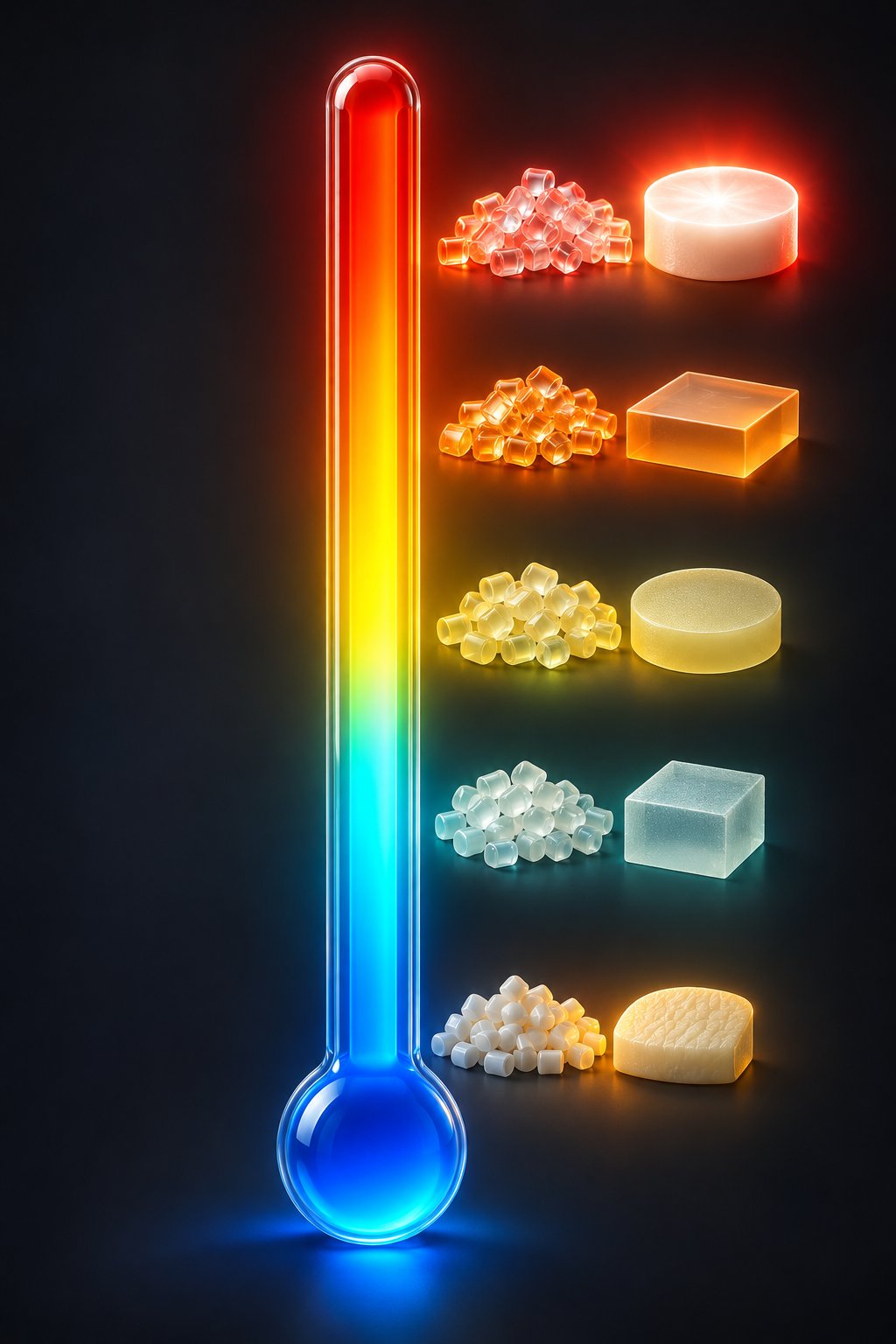
Knowing which mechanism attacks a polymer is only half the picture. The equally urgent question for any engineer selecting materials or setting processing parameters is: at what temperature does the damage actually begin? A degraded polymer does not announce itself with a single universal threshold. Each resin family has its own onset point, its own dominant breakdown pathway, and its own signature set of volatile by-products. Having those numbers organized in one place transforms abstract degradation science into a practical material selection tool.
Degradation Onset Temperatures Across Common Polymer Families
The table below consolidates generally accepted degradation onset temperature ranges for ten widely used polymers, organized by family. These values represent approximate onset temperatures typically observed via thermogravimetric analysis (TGA) under inert atmosphere conditions at standard heating rates. Keep in mind that exact values shift with heating rate, atmosphere, molecular weight, additive package, and sample preparation, so treat these as comparative reference points rather than absolute design limits.
| Polymer Family | Polymer Name | Approx. Degradation Onset Range (°C, N₂) | Primary Degradation Mechanism | Key Volatile Products | Relative Thermal Stability |
|---|---|---|---|---|---|
| Polyolefins | Polyethylene (PE) | 390–450 | Random chain scission + cross-linking | Alkanes, alkenes, waxes | Moderate–High |
| Polyolefins | Polypropylene (PP) | 350–420 | Random chain scission | Pentane, propene, oligomeric hydrocarbons | Moderate |
| Vinyls | Polyvinyl Chloride (PVC) | 200–300 (first stage: HCl loss) | Side-group elimination (dehydrochlorination) | HCl, benzene, toluene (second stage) | Low |
| Styrenics | Polystyrene (PS) | 350–400 | End-chain + random scission | Styrene monomer, dimers, trimers | Moderate |
| Acrylics | Poly(methyl methacrylate) (PMMA) | 300–370 | End-chain scission (depolymerization) | Methyl methacrylate monomer (~95% yield) | Low–Moderate |
| Engineering Thermoplastics | Polyethylene Terephthalate (PET) | 370–420 | Random scission (ester bond cleavage) | Acetaldehyde, CO₂, benzoic acid derivatives | Moderate–High |
| Engineering Thermoplastics | Nylon 6,6 (PA66) | 380–420 | Random chain scission | Cyclopentanone, CO₂, NH₃, HCN | Moderate–High |
| Engineering Thermoplastics | Polycarbonate (PC) | 420–480 | Random chain scission + rearrangement | Bisphenol A, CO₂, phenol derivatives | High |
| High-Performance Thermoplastics | Polyether Ether Ketone (PEEK) | 530–580 | Random chain scission | Phenol, CO, CO₂, dibenzofuran | Very High |
| Fluoropolymers | Polytetrafluoroethylene (PTFE) | 500–560 | End-chain scission (depolymerization) | Tetrafluoroethylene monomer, hexafluoropropene | Very High |
A few patterns jump out immediately. PVC stands apart with by far the lowest onset temperature, reflecting the ease with which its C–Cl bonds participate in the dehydrochlorination zipper reaction. At the opposite extreme, PEEK and PTFE resist thermolytic breakdown until temperatures exceed 500°C, placing them in the high temp polymer category favored for aerospace and semiconductor applications. Polypropylene, one of the most widely processed resins on the planet, occupies a middle ground. TGA studies of PP pyrolysis under nitrogen show a single-step decomposition region with onset temperatures shifting from roughly 370°C to 420°C as the heating rate increases from 5 to 40 K/min, a reminder that quoted onset values always depend on how the measurement was performed.
The order of decomposition reported across multiple kinetic studies, PS < PET < PP < LDPE < HDPE, further confirms that even within the polyolefin family, subtle structural differences produce meaningful shifts in stability ranking.
Understanding Why a Thermoset Behaves Differently from a Thermoplastic
The table above covers thermoplastics exclusively, but what about epoxies, phenolics, and other cross-linked resins? Here, the degradation story takes a fundamentally different turn.
When you heat a thermoplastic, its chains gain mobility first. They slide past one another, the material softens, and eventually it flows. Chemical degradation, if it occurs, happens after or alongside this physical transition. A thermoset plastic loses its shape when heated through an entirely different route. Its extensively cross-linked, three-dimensional molecular network prevents chain slippage and flow altogether. There is no melting step. Instead, as temperature climbs, the thermoset retains its dimensional stability until the thermal energy becomes high enough to rupture the covalent cross-links and backbone bonds themselves. At that point, the material chars and decomposes rather than softening.
This distinction carries real-world consequences:
- No processing-degradation window in the traditional sense. Thermosets cannot be reprocessed by melting. Once cured, their shape is permanent until destruction. As noted in thermoset plastics literature, they will degrade or char if heated beyond their decomposition temperature rather than flowing like a thermoplastic.
- Higher service temperatures, up to a point. The cross-linked network provides excellent dimensional stability under heat, which is why thermosets dominate in high-temperature electrical, automotive, and aerospace components. Properties do decline as temperature approaches or exceeds the glass transition, but the material holds its shape far longer than an equivalent thermoplastic would.
- Brittle failure under thermal overload. When a thermoset finally does degrade, the failure mode is charring, cracking, and gas evolution rather than the gradual softening and drooling you see with thermoplastics. There is no second chance to reshape or recover the material.
Imagine two samples side by side at 300°C: a polypropylene part and a phenolic molding. The PP has long since melted into a puddle, potentially already showing signs of molecular weight loss. The phenolic retains its exact shape and dimensions, barely affected, because its rigid network simply does not permit flow. Push the temperature to 400°C or beyond, and the phenolic begins to char and emit smoke, but it never melts. This behavioral contrast is why material selection for high-temperature applications so often steers toward thermosets or toward the small number of high-performance thermoplastics, like PEEK, that combine extreme thermal stability with melt processability.
Molecular Structure as a Predictor of Thermal Stability
Rather than memorizing individual onset temperatures, you can build a mental framework for estimating a polymer's thermal resilience directly from its molecular architecture. Six structural factors dominate:
- Backbone bond energy. The most fundamental predictor. C–C single bonds (~350 kJ/mol) are weaker than C–F bonds (~485 kJ/mol) or aromatic C=C bonds within ring structures. This is exactly why PTFE, with its perfluorinated backbone, and PEEK, with its aromatic ether-ketone chain, sit at the top of the stability table. The stronger the weakest bond in the repeat unit, the more energy it takes for thermolytic cleavage to begin.
- Aromatic content. Polymers with aromatic rings directly in the backbone, such as polycarbonate, PET, and PEEK, benefit from the resonance stabilization energy of those rings. Aromatic structures distribute thermal energy across the delocalized electron system, raising the energy threshold for bond rupture compared to purely aliphatic chains.
- Side-group stability. Pendant groups that detach easily, such as the chlorine in PVC or the ester group in polyvinyl acetate, create low-energy pathways for degradation that activate well before the backbone itself is threatened. Conversely, small and tightly bonded side groups like the methyl in polypropylene or the fluorine in PVDF contribute less vulnerability.
- Molecular weight and its distribution. Higher molecular weight polymers tend to exhibit slightly higher onset temperatures because fewer chain ends are available to initiate end-chain scission. However, very broad molecular weight distributions include short chains that can act as weak links, shifting the onset downward.
- Branching. Long-chain branches introduce tertiary carbon atoms, where three carbon-carbon bonds meet at a single carbon. Tertiary C–H bonds have lower dissociation energies than secondary or primary ones, making branched polyethylene more susceptible to radical formation and oxidative attack than its linear counterpart. This is one reason HDPE consistently outranks LDPE in thermal stability studies.
- Crystallinity. Crystalline regions pack polymer chains tightly in ordered arrays, restricting oxygen diffusion and chain mobility. This physical barrier slows both thermolytic and thermo-oxidative reactions. A semicrystalline polymer like HDPE, with crystallinity often exceeding 60%, resists initial degradation more effectively than the largely amorphous LDPE, even though both share identical repeat unit chemistry.
When you evaluate a new resin for a demanding application, running through this checklist gives you a rapid first estimate of where it will land on the stability spectrum. Strong backbone bonds, aromatic rings, stable side groups, high molecular weight, minimal branching, and high crystallinity all push the onset temperature upward. Weak links in any of these categories pull it down.
Of course, structure alone tells you where degradation begins. To understand how fast it proceeds once started, and to predict how long a part will last at a given temperature, you need the quantitative language of degradation kinetics: activation energies, rate constants, and the mathematical models that connect them.
Degradation Kinetics and Activation Energy Explained
Structural features and degradation onset temperatures tell you where the danger zone starts. But when a processing engineer asks, "How long can my resin survive at 220 degrees C before properties drop below spec?" or "If I lower my barrel temperature by 15 degrees, how much longer will this part last in service?", the answers live in the mathematics of polymer degradation kinetics. Sounds intimidating? It doesn't have to be. The core idea is surprisingly intuitive once you strip away the academic notation.
The Arrhenius Relationship in Polymer Degradation
At its heart, degradation kinetics asks a single question: how does the rate of molecular breakdown change with temperature? The tool that answers this is the Arrhenius equation, a relationship that has governed chemical kinetics for over a century. Here is how it works, step by step.
Every degradation reaction, whether random chain scission in polypropylene or depolymerization of PMMA, requires a minimum energy input to get started. Imagine a boulder sitting in a valley. It won't roll over the hilltop and down the other side unless you push it hard enough to clear the crest. That "hilltop" is the activation energy (Ea), the energy barrier that molecules must overcome before bonds break and degradation proceeds.
The Arrhenius equation ties the degradation rate constant, k, to temperature and activation energy through the following relationship:
k(T) = A × exp(-Ea / RT)
Where:
- k(T) is the rate constant at temperature T, describing how fast degradation proceeds
- A is the pre-exponential factor (also called the frequency factor), related to how often molecular collisions occur in the right orientation
- Ea is the activation energy in joules per mole (J/mol) or kilojoules per mole (kJ/mol)
- R is the universal gas constant (8.314 J/mol·K)
- T is the absolute temperature in Kelvin
The exponential term is where all the action lives. Because Ea sits in the exponent with a negative sign, even small changes in temperature produce large shifts in the degradation rate. Raise the temperature by 10 degrees C, and you might double or triple the rate of chain scission. Lower it by the same amount, and you dramatically slow the damage.
What does a higher versus lower activation energy mean in practice? A polymer with a high Ea has a tall energy barrier protecting its bonds. At any given temperature, fewer molecules have enough thermal energy to clear that barrier, so the degradation rate stays low. This polymer resists thermal breakdown more effectively. A polymer with a low Ea has a shallow barrier, meaning degradative reactions cause irreversible property loss at comparatively modest temperatures because less energy is needed to initiate bond cleavage.
As a Patsnap Eureka technical review summarizes, activation energy serves as a key indicator of thermal stability and degradation susceptibility, making it the single most important kinetic parameter for comparing materials and predicting service life. Engineering thermoplastics like PEEK and polycarbonate exhibit higher activation energies than commodity resins like polyethylene, which aligns perfectly with the stability rankings discussed earlier.
Isoconversional Methods for Determining Activation Energy
Here is where many engineers hit a wall: how do you actually measure Ea for a specific polymer? You can't observe it directly. Instead, you extract it from thermogravimetric analysis (TGA) data collected at multiple heating rates, using mathematical methods that exploit a clever principle.
The core idea is elegant. Run the same polymer sample through TGA at three or more different heating rates, say 2, 5, 10, and 20 degrees C per minute. At each heating rate, the polymer reaches a given level of mass loss, called a conversion level (for example, 5% weight loss), at a different temperature. Faster heating pushes that milestone to a higher temperature; slower heating allows it to occur at a lower temperature. By analyzing how the temperature at a fixed conversion level shifts with heating rate, you can mathematically extract the activation energy without ever needing to assume what type of reaction model governs the process.
This family of techniques is known as isoconversional methods (also called "model-free" methods), and published research on PLA bionanocomposites describes them as the most appropriate methods for calculating activation energy of thermally active reactions because they determine Ea at different conversions without any modelistic assumptions. Three methods dominate the field:
- Kissinger method: Uses the temperature at which the degradation rate is maximum (the peak of the derivative TGA curve) at each heating rate. Plotting ln(β/Tmax2) versus 1/Tmax yields a straight line whose slope gives Ea. It is the most widely used approach due to its simplicity, but it produces only a single activation energy value for the entire process, which can be a limitation when multiple degradation steps are involved.
- Flynn-Wall-Ozawa (FWO) method: Plots the logarithm of the heating rate against the reciprocal of the temperature at each fixed conversion level. TA Instruments applies this approach for polymer lifetime estimation, calculating Ea from the slope of these plots and then using iterative refinement to improve accuracy. The FWO method works well for systems where activation energy may change with conversion, since it calculates Ea at each conversion point independently.
- Friedman method: A differential isoconversional approach that uses the instantaneous rate of mass loss at a given conversion across different heating rates. It avoids some of the mathematical approximations inherent in integral methods like FWO, making it theoretically more precise but also more sensitive to experimental noise in the TGA signal.
In practice, researchers often apply two or more methods to the same dataset and compare results for consistency. For instance, activation energies calculated for neat PLA films using the Flynn-Wall-Ozawa model ranged from approximately 245 to 259 kJ/mol across conversion levels of 0.1 to 0.9, while the Kissinger-Akahira-Sunose model produced closely matching values of 250 to 262 kJ/mol for the same material, with R2 values consistently above 0.994, as reported in thermal degradation kinetics research by Pal and Katiyar. When two independent methods converge on similar Ea values, confidence in the result increases significantly.
If activation energy varies dramatically across conversion levels, that variation itself is informative. It signals that the degradation involves multiple competing or consecutive reactions rather than a single clean mechanism, guiding the engineer toward a more nuanced understanding of what is happening at the molecular level.
Practical Value of Kinetics Data
Why go through all this effort? Because kinetics data transforms vague thermal stability ratings into three specific, actionable engineering outputs:
- Lifetime prediction. With a known activation energy, you can estimate how long a polymer component will survive at a given service temperature. The TGA-based lifetime estimation method developed by Flynn, Wall, and Toop uses Ea values extracted from multi-rate experiments to project failure times at use temperatures far below the accelerated test conditions. For PTFE wire insulation, this approach showed that the estimated lifetime increases dramatically for even a small decrease in operating temperature, a relationship that only becomes visible and quantifiable through kinetics. Federal regulations for nuclear reactor components and power transmission insulation already require this type of accelerated lifetime prediction.
- Processing window optimization. Knowing the activation energy tells you exactly how sensitive your resin is to temperature excursions during extrusion or injection molding. A polymer with a high Ea tolerates occasional temperature spikes with less damage than one with a low Ea. This information helps processors set barrel temperatures, adjust residence times, and establish alarm thresholds with quantitative justification rather than trial-and-error guesswork.
- Material comparison on a level playing field. Onset temperatures from TGA curves depend heavily on heating rate, sample size, and instrument calibration, making direct comparisons between materials tested in different labs unreliable. Activation energy, by contrast, is a fundamental material property extracted from the relationship between multiple runs. It provides a more robust and transferable basis for ranking thermal stability across polymer candidates for a given application.
Kinetics turns qualitative thermal stability into quantitative, actionable engineering data. An onset temperature tells you where degradation starts; activation energy tells you how fast it accelerates, how long the material will last, and how much processing margin you actually have.
The real power of polymer degradation kinetics emerges when you combine Ea values with the degradation temperature data and mechanistic understanding covered earlier. You know which bonds break, at what temperature they break, and how fast the damage accumulates. The remaining piece of the puzzle is verification: how do you actually run the TGA experiments, read the resulting thermograms, and ensure your data meets recognized industry standards?
Testing Thermal Stability with TGA and Industry Standards
Activation energies and degradation mechanisms are only as reliable as the experimental data behind them. The instrument that generates nearly all of that data, from onset temperatures to kinetic parameters, is the thermogravimetric analyzer. Yet a surprising number of engineers receive TGA results and struggle to extract meaningful conclusions from the curves. Knowing how to read a TGA thermogram, and which standardized methods ensure your results are defensible, separates confident material decisions from expensive guesswork.
Thermogravimetric Analysis and Key Parameters
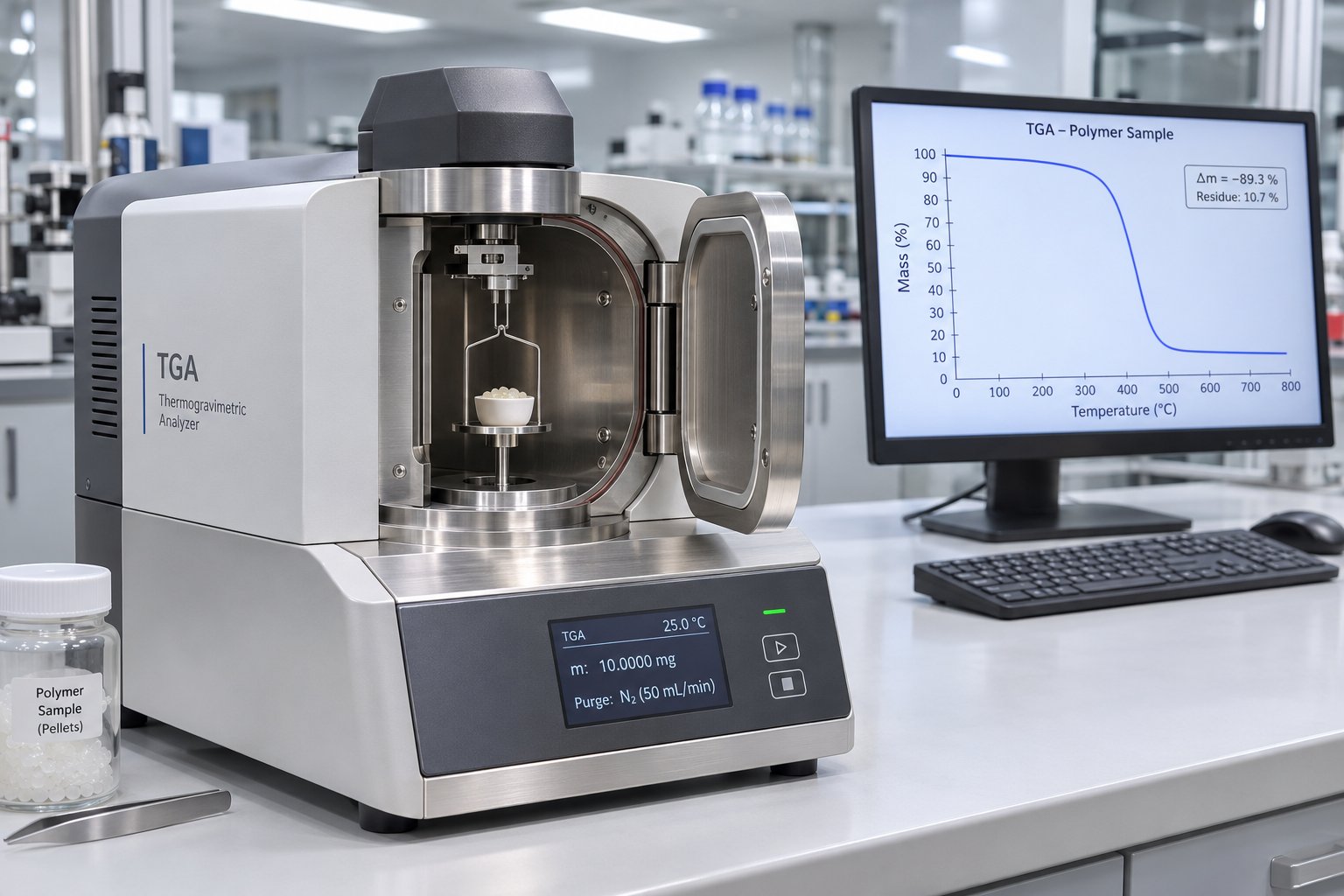
Thermogravimetric analysis for polymer characterization works on a straightforward principle: a small sample, typically 5 to 15 milligrams, sits on a precision microbalance inside a programmable furnace. As the furnace temperature rises at a controlled rate, the instrument continuously records the sample's mass. Every milligram lost corresponds to a volatile product escaping, whether that is moisture evaporating at low temperatures, plasticizer boiling off at moderate temperatures, or backbone fragments departing during full-blown decomposition.
The resulting mass-versus-temperature curve contains several parameters that engineers rely on for TGA thermal stability testing and material qualification:
- Onset temperature (Tonset): The point where the curve first deviates meaningfully from the stable baseline. This marks the beginning of significant mass loss and represents the upper boundary of the polymer's thermal stability window. A higher onset temperature means the material tolerates more heat before degradation begins.
- Temperature at 5% mass loss (T5%): A widely used benchmark for comparing materials on equal footing. Because onset determination can vary with software algorithms and analyst judgment, T5% provides a more reproducible reference point that reduces subjectivity.
- Temperature at 50% mass loss (T50%): Indicates the midpoint of the primary decomposition event. The gap between T5% and T50% reveals how rapidly degradation progresses once it starts. A narrow gap signals fast, catastrophic breakdown; a wide gap suggests a more gradual process.
- Maximum degradation rate temperature (Tmax): Extracted from the derivative TGA (DTG) curve, this is the temperature at which mass loss occurs most rapidly. As NC State's polymer science textbook explains, peaks in the DTG curve indicate the temperatures at which mass loss occurs most rapidly and help identify overlapping degradation steps that may appear as a single slope on the standard TGA curve. Tmax is also the value used in Kissinger-method activation energy calculations discussed in the previous section.
- Residual char percentage: The mass remaining after all organic decomposition is complete. This residue represents inorganic fillers like glass fibers, calcium carbonate, or carbon black, plus any carbonaceous char formed during pyrolysis. If you are verifying a supplier's claim that a compound contains 30% mineral filler, the char residue gives you a direct answer.
Each of these parameters answers a different engineering question. Tonset and T5% define your safe processing ceiling. T50% and Tmax characterize the severity and speed of breakdown. Residual mass confirms composition. Together, they turn a single TGA run into a comprehensive thermal fingerprint of the material.
How to Read a TGA Thermogram
Imagine you have a freshly printed TGA curve in front of you: mass percentage on the vertical axis, temperature on the horizontal axis, and a line that starts flat, drops through one or more steps, and eventually levels off. Here is how to decode it, region by region.
The initial plateau is the flat baseline at the top of the curve, representing the sample at its full starting mass. This region confirms thermal stability. The longer it stays flat as temperature rises, the more thermally robust the material is. A Torontech TGA interpretation guide notes that a small, early dip around 100 degrees C in this region is a strong indication of surface moisture, an important first checkpoint especially for hygroscopic resins like nylon or PET.
The onset of mass loss is where the curve begins its first significant downward departure from the baseline. This is the point that defines Tonset. For a filled polypropylene sample, you might see this onset around 350 degrees C under nitrogen, marking the moment backbone scission begins generating volatile fragments.
The steepest slope region corresponds to the maximum rate of degradation. On the DTG curve, this appears as a sharp peak. A tall, narrow DTG peak indicates rapid decomposition over a tight temperature window, while a short, broad peak signals a slower, more drawn-out process. Materials like PVC often show two distinct mass-loss steps: the first sharp drop from HCl loss during dehydrochlorination, followed by a second drop as the remaining carbon backbone breaks down at higher temperature.
The residual plateau is the final flat region at the bottom of the curve. Whatever mass remains here did not volatilize, meaning it is either inorganic filler, ash, or stable char. If the curve settles at 30% remaining mass, you know roughly 30% of the original sample was non-combustible material.
Use this checklist every time you evaluate a thermogram:
- Is there early mass loss below 150 degrees C indicating moisture or residual solvent?
- At what temperature does the baseline first break, establishing Tonset?
- How many distinct mass-loss steps are visible, and what is the percentage drop in each step?
- Does the DTG curve reveal overlapping events hidden in the TGA curve's apparently single slope?
- What is the Tmax from the DTG peak, and is it consistent across replicate runs?
- What percentage of residue remains, and does it match the expected filler or additive loading?
- Was the test run under nitrogen (measuring intrinsic thermal stability) or air (measuring thermo-oxidative stability)?
That last point deserves emphasis. As discussed earlier, the atmosphere inside the furnace fundamentally changes both the onset temperature and the degradation pathway. A TGA curve run in nitrogen tells you about pyrolytic stability. The same polymer tested in air will show an earlier onset and potentially different step structure due to oxidative reactions. Always confirm the gas environment before drawing conclusions from any thermogram.
Relevant Testing Standards for Practitioners
Running a TGA experiment without referencing an established standard is like measuring a dimension without specifying the tolerance. Standards ensure your results are reproducible, comparable across laboratories, and defensible in supplier disputes or regulatory submissions. Intertek's polymer testing reference highlights that TGA provides quantitative measurement of mass change associated with thermal degradation, decomposition, and oxidation, with the gas environment preselected for either inert, oxidative, or combined conditions depending on the testing objective.
The following table summarizes the most commonly referenced standards for thermal stability evaluation:
| Standard | Method | What It Measures | Typical Application |
|---|---|---|---|
| ISO 11358 | Thermogravimetry (TG) of polymers, general principles | Mass change as a function of temperature or time under controlled atmosphere | Baseline thermal stability characterization; comparing polymer grades and formulations |
| ASTM E1131 | Compositional analysis by thermogravimetry | Quantitative breakdown of volatiles, polymer content, carbon black, and inorganic residue (ash) | Incoming material verification; quality control of compounded resins and composites |
| ASTM D3850 | Rapid thermal degradation of solid electrical insulating materials by TGA | Temperature index and relative thermal endurance under accelerated conditions | Electrical insulation qualification; ranking materials for wire and cable applications |
| ISO 176 | Determination of loss of plasticizers by activated carbon method (heat aging) | Plasticizer migration and volatile loss under sustained elevated temperature | Long-term heat aging assessment for flexible PVC and plasticized compounds |
ASTM E1131 deserves a closer look for compounders and quality teams. This method segments a single TGA run into compositional fractions by switching from inert to oxidative atmosphere mid-test. The initial nitrogen phase drives off volatiles and decomposes the polymer matrix, while the subsequent air or oxygen phase burns off carbon black or carbonaceous residue. What remains is purely inorganic filler or ash. This sequential approach quantifies four distinct material fractions, highly volatile matter, medium volatile matter, combustible content, and ash, from one experiment and one small sample.
Differential scanning calorimetry (DSC) plays a valuable complementary role. While TGA tracks mass loss, DSC measures heat flow, making it sensitive to exothermic events that do not necessarily involve mass change. Oxidative degradation often produces a sharp exothermic peak on a DSC scan before significant volatile loss registers on the TGA. Oxidative induction time (OIT) testing by DSC, for instance, measures how long a polymer resists oxidation at a set temperature in oxygen, providing a direct gauge of antioxidant effectiveness. Pairing DSC exothermic data with TGA mass-loss data gives you both the "when" and the "how much" of degradation in a single testing campaign.
Reliable TGA data and proper standard adherence answer the critical diagnostic question: is my material degrading, and how badly? The equally important follow-up, how do I stop it from degrading in the first place, requires a shift from measurement to intervention through stabilizer chemistry and process control.
How to Prevent Thermal Degradation in Polymers Through Stabilizers and Process Control
Diagnosing degradation through TGA curves and activation energy calculations is essential, but diagnosis alone does not save a single part from the scrap bin. The real payoff comes from translating that knowledge into prevention. Two complementary strategies stand between your polymer and irreversible molecular damage: chemical stabilization that intercepts destructive reactions at the molecular level, and processing parameter control that minimizes the thermal and mechanical stress your resin experiences in the first place.
Primary and Secondary Antioxidant Systems
The auto-oxidation cycle described earlier, where radicals, oxygen, and hydroperoxides feed a self-accelerating loop of chain destruction, has a critical vulnerability: it can be interrupted at more than one point. Antioxidant chemistry exploits this by deploying two distinct classes of stabilizers that attack different stages of the cycle.
Primary antioxidants, most commonly hindered phenols, function as radical scavengers. When a carbon-centered radical or peroxy radical forms on a polymer chain, the hindered phenol donates a hydrogen atom to that radical, neutralizing it and stopping the chain reaction in its tracks. The bulky tert-butyl groups flanking the phenolic hydroxyl prevent the antioxidant molecule itself from reacting prematurely, giving it the selectivity and longevity needed for both melt processing and long-term service protection.
Secondary antioxidants operate upstream in the cycle. Rather than scavenging radicals directly, they decompose hydroperoxides, the branching agents that generate fresh radicals when they split apart under heat. Phosphite antioxidants are the most widely used secondary type. As they reduce hydroperoxides to stable alcohols, the phosphites themselves oxidize to phosphates, effectively removing the chemical species responsible for the exponential acceleration of auto-oxidation. Thioester-based secondary antioxidants perform a similar hydroperoxide-decomposing role, though they tend to act more slowly and are often favored for long-term heat aging protection rather than melt-processing stabilization.
Here is the critical insight for anyone formulating a stabilizer package: using a primary antioxidant alone leaves hydroperoxides free to accumulate and eventually overwhelm the radical-scavenging capacity. Using a secondary antioxidant alone leaves the initial radicals unchecked. Research on phosphite antioxidants confirms that synergistic combinations of hindered phenols with phosphite or thioester co-stabilizers consistently outperform either class used individually. The primary antioxidant catches the radicals that form; the secondary antioxidant eliminates the hydroperoxides that would otherwise generate new ones. Together, they break the cycle at two points simultaneously, delivering protection that is greater than the sum of its parts.
Heat Stabilizers and UV Stabilizers by Polymer Type
Not every polymer responds to the same antioxidant for polymer processing. The specific degradation mechanism at play, whether it is radical-driven auto-oxidation, ionic dehydrochlorination, or hydrolytic chain cleavage, dictates which stabilizer chemistry will actually work. Choosing the wrong system wastes money and can even accelerate the problem.
PVC is the most stabilizer-dependent commodity plastic. Because its primary degradation mode is dehydrochlorination rather than radical oxidation, PVC demands heat stabilizers that scavenge liberated HCl and replace labile chlorine atoms on the chain. A comparative study by Jubsilp et al. evaluated three major PVC stabilizer systems, lead-based (Pb), calcium-zinc (CaZn), and organic-based stabilizers (OBS), for rigid pipe applications. Their findings showed that the OBS system maintained the initial color of PVC for approximately 50 minutes at 180 degrees C before yellowing began, compared to 40 minutes for CaZn and just 30 minutes for Pb. TGA analysis further revealed that the 5% weight-loss temperature was highest for PVC stabilized with OBS (297 degrees C) versus Pb (295 degrees C) and CaZn (293 degrees C). Kinetic analysis using the Kissinger method yielded activation energies of 140 kJ/mol for PVC/OBS, 132 kJ/mol for PVC/Pb, and 110 kJ/mol for PVC/CaZn, confirming that organic-based stabilizers raised the energy barrier for dehydrochlorination more effectively than traditional heavy-metal alternatives.
The following list organizes major polymer heat stabilizer types by category, function, and target polymer family:
- Hindered phenol antioxidants — Radical scavengers (primary antioxidants). Used broadly in polyolefins (PE, PP), styrenics, engineering thermoplastics (PC, PET, nylon), and elastomers. Essential during melt processing and for long-term thermal aging resistance.
- Phosphite antioxidants — Hydroperoxide decomposers (secondary antioxidants). Widely combined with hindered phenols in polyolefin, styrenic, and engineering plastic formulations. Provide color stability during processing and enhance melt flowability. Examples include Irgafos 168, antioxidant 626, PEPQ, and antioxidant 9228, the latter maintaining thermal stability above 300 degrees C for high-temperature engineering resins like PET, PBT, PC, and PPS.
- Thioester antioxidants — Hydroperoxide decomposers (secondary antioxidants). Slower-acting than phosphites but effective for long-term heat aging protection. Common in polyolefin pipe, geomembrane, and wire and cable applications.
- Calcium-zinc (Ca-Zn) stabilizers — HCl scavengers for PVC. Lower toxicity alternative to lead-based systems. Zinc carboxylates substitute for labile chlorine atoms, while calcium carboxylates neutralize evolved HCl.
- Organotin stabilizers — High-performance HCl scavengers and chlorine replacement agents for PVC. Deliver excellent clarity and weathering resistance, making them preferred for rigid PVC profiles, window frames, and clear packaging.
- Organic-based stabilizers (OBS) — Newer heavy-metal-free PVC stabilizers, often based on uracil chemistry. Research shows they retard the dehydrochlorination zipper reaction by scavenging HCl and Cl radicals, offering environmental and regulatory advantages over Pb-based systems.
- HALS (hindered amine light stabilizers) — Radical scavengers regenerated during the stabilization cycle, providing long-lasting UV protection. Critical for polyolefin, styrenic, and polyurethane products exposed to sunlight, where photo-thermal synergistic degradation accelerates surface embrittlement and chalking.
- Benzotriazole and benzophenone UV absorbers — Absorb harmful UV wavelengths and convert them to harmless heat before they can generate chain-breaking radicals. Used in PC, PMMA, PET, and coatings where optical clarity must be preserved alongside weathering resistance.
For outdoor applications, the interplay between heat and UV exposure creates a compounding failure mode. Sunlight generates surface radicals; heat drives those radicals through the auto-oxidation cycle at accelerated rates. Combining a HALS with a UV absorber and a conventional antioxidant package addresses all three degradation pathways simultaneously, a layered defense that individual additives cannot match alone.
Processing Parameter Optimization to Minimize Degradation
Even the best stabilizer package has limits. Push processing conditions far enough beyond the safe window, and no additive can fully compensate. The most effective approach to preventing thermal degradation combines chemical stabilization with disciplined control of the physical parameters that determine how much thermal and mechanical stress your resin actually experiences.
Five processing variables matter most:
- Melt temperature control. This is the most direct lever. Every degree above the minimum required for adequate flow pushes the resin closer to its degradation onset. Accurate thermocouple placement and calibration are non-negotiable. As processing experts note, gaps between thermocouple tips and barrel surfaces send erroneous feedback to controllers, resulting in heat delivery beyond the intended setpoint. A runaway heater band can burn material as it passes through the affected zone, even when the displayed temperature looks normal.
- Residence time reduction. Time at temperature is just as dangerous as peak temperature. Material lingering in dead zones, oversized barrels, or long transfer lines accumulates thermal damage minute by minute. Matching extruder size to job output so that as much of the machine's maximum throughput as possible is utilized minimizes the time any given polymer pellet spends at melt temperature. Auxiliary tooling and plumbing between the extruder exit and die should also be minimized, because pressure drops in these areas reduce flow velocity and extend exposure time.
- Inert gas blanketing. The thermo-oxidative pathway, which begins at significantly lower temperatures than purely thermal degradation, can be suppressed by excluding oxygen from the melt stream. Nitrogen blanketing of feed hoppers, vent ports, and die exits reduces radical formation and delays the onset of oxidative chain damage, particularly during shutdowns and startups when screw speed is low and material sits idle at temperature.
- Proper drying of hygroscopic resins. Condensation polymers like PET, nylon, and polycarbonate absorb atmospheric moisture that triggers hydrolytic chain cleavage at processing temperatures. Drying to manufacturer-specified moisture levels before processing is essential. Equally important is avoiding over-drying, which can cause burned, degraded material before it even enters the barrel. Follow recommended drying times and temperatures precisely.
- Screw speed optimization. Higher screw speeds increase shear rate, and shear generates viscous heat within the melt itself, independent of barrel heater settings. For shear-sensitive resins, running at excessive rpm can push the actual melt temperature well above the setpoint, entering the degradation zone invisibly. Knowing what type of screw is in the machine and whether its shear characteristics match the thermal sensitivity of the resin being processed prevents this hidden source of damage.
The processing temperature window must balance two competing demands: enough heat to achieve adequate melt flow, uniform filling, and proper fusion, but not so much that molecular breakdown begins stealing properties. This window varies dramatically by polymer. PVC, for example, begins dehydrochlorinating around 170 to 180 degrees C, yet requires processing temperatures in that same range for adequate fusion, leaving almost no margin for error without effective heat stabilizers. Polyethylene offers a much wider window, with processing temperatures typically between 180 and 240 degrees C against degradation onsets above 390 degrees C under inert conditions. Understanding where your specific resin sits on this spectrum, and whether your actual melt temperature (not just your setpoint) stays within the safe zone, is the difference between consistent production and chronic quality problems.
Stabilizer chemistry and process discipline form two halves of the same defense. But there is a third factor that many processors overlook entirely: the physical hardware that conveys, melts, and mixes the polymer. Screw geometry, compression ratio, and mixing section design directly determine the shear heating and residence time distribution your resin experiences, making barrel and screw engineering a front-line tool for managing degradation risk.
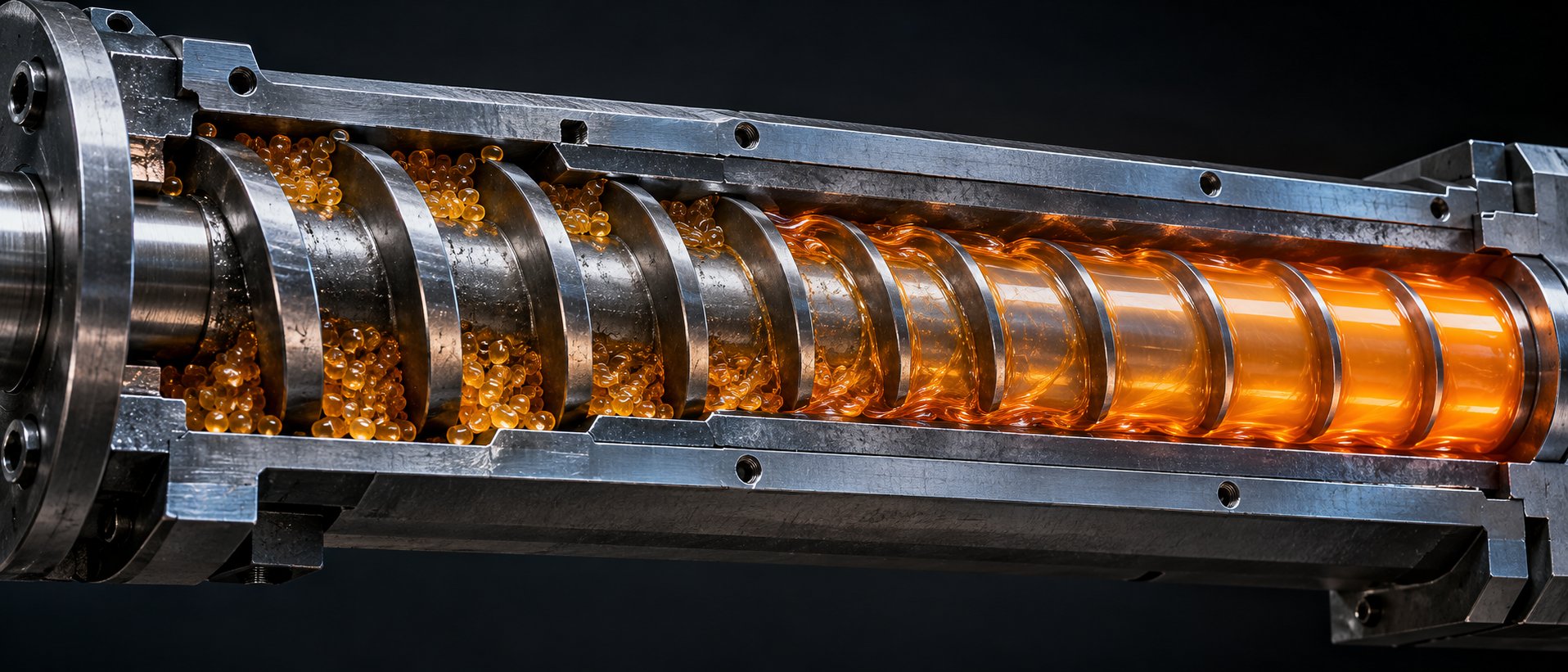
Screw Design as a Front-Line Defense Against Thermal Degradation
You have dialed in your barrel temperature profile, dried your resin to spec, and loaded a well-formulated stabilizer package. Yet the extrudate still comes out discolored, or injection-molded parts fail mechanical testing after a few weeks in the field. The hidden variable? The screw itself. Its geometry, flight depths, compression ratio, and mixing section design collectively determine how much shear heating and residence time the polymer actually endures, often pushing the real melt temperature far beyond what the barrel thermocouples report. In many degradation troubleshooting cases, the screw is not just a conveying device. It is the single biggest controllable factor standing between a stable melt and a degraded one.
How Screw Geometry Influences Melt Temperature and Shear Heating
Imagine two parallel plates with molten polymer squeezed between them, one plate sliding against the other. The closer those plates sit together and the faster the moving plate travels, the higher the shear rate, and the more viscous heat the polymer absorbs. That is essentially what happens inside every screw channel: the rotating flight surface drags the melt against the stationary barrel wall, generating frictional and viscous heating throughout the channel cross-section.
In many extrusion setups, this shear heating accounts for 60 to 80 percent of the total heat input to the polymer, dwarfing the contribution from external barrel heaters. That statistic alone explains why barrel temperature setpoints can be misleading. A screw with aggressive geometry can push actual melt temperature 20 to 40 degrees C above the displayed barrel temperature, silently entering the degradation zone while every controller reading looks normal.
Four geometric parameters drive this effect:
- Compression ratio. Defined as the ratio of channel depth in the feed zone to channel depth in the metering zone, this value determines how aggressively the polymer is compacted and sheared as it travels forward. A higher compression ratio squeezes the melt into a shallower channel, intensifying shear rates and viscous heat generation. Research on PVC extrusion confirms that screw designs with lower compression ratios enhance throughput and reduce melt temperature, directly lowering the risk of thermal degradation for heat-sensitive resins. A general-purpose screw with a compression ratio of 2.0, for instance, was shown to allow higher throughput per revolution while keeping temperature rise in check compared to screws with ratios of 2.8 or 3.0.
- Flight depth (channel depth). Deeper channels in the metering zone reduce the shear rate across the melt film because the polymer has more room to flow without being forced through a tight gap. The trade-off is that deeper channels may compromise mixing uniformity, since less shear means less energy available to break up unmelted particles or disperse additives. Shallower channels, conversely, improve plasticizing consistency but concentrate viscous heating into a thinner melt film, raising localized temperatures that can exceed the polymer's degradation threshold.
- Channel geometry and flight width. Shallower grooves promote pressure build-up and increase shear rates, resulting in elevated torque, while deeper grooves enlarge channel volume and reduce shear under equivalent shaft speeds. Flight width also matters: wider flights increase the area of high-shear contact between the flight tip and barrel wall. For thermally sensitive polymers, every extra square millimeter of high-shear surface area translates into additional viscous heat the resin must absorb.
- Mixing section design. Specialized mixing elements inserted along the screw length dramatically affect both shear intensity and residence time distribution. As Jim Frankland of Plastics Technology explains, dispersive mixers like the Maddock design force melt over very narrow clearances where shear stress is extremely high, while distributive mixers like the Saxton design divide and reorient the flow repeatedly with lower shear intensity. The choice between dispersive and distributive mixing directly determines how much additional thermal energy the polymer absorbs in the mixing zone, and whether that energy pushes it past its stability limit.
The interplay among these factors creates a situation where two screws of identical diameter and L/D ratio can deliver vastly different melt temperatures to the die. One might keep polypropylene comfortably at 230 degrees C; the other might drive it past 270 degrees C through excessive shear, chewing into the safety margin before degradation onset. And because most processors monitor barrel wall temperature rather than true melt temperature, the damage can go undetected until discolored product, reduced mechanical properties, or volatile emissions make it impossible to ignore.
Matching Screw Design to Polymer Thermal Sensitivity
Thermally sensitive polymers demand screw geometries specifically tailored to their narrow processing-degradation windows. PVC, polyoxymethylene (POM), and polyvinylidene fluoride (PVDF) are three resins where screw geometry thermally sensitive polymers require particularly careful attention, and getting the screw wrong can mean the difference between a stable process and chronic degradation.
PVC processing illustrates the challenge perfectly. The resin begins dehydrochlorinating around 170 to 180 degrees C, yet it needs temperatures in that same range for adequate fusion. ANSYS Polyflow simulations of molten PVC in a counter-rotating twin-screw extruder demonstrated that optimal extrusion conditions required precise matching of screw speed, inlet flow rate, and section geometry to prevent the melt temperature from exceeding safe limits. Barrel temperature was maintained at 200 degrees C in the kneading section but reduced to 160 degrees C in the compressing and mixing sections, with screw rotational speed held at 43 rpm and outlet rate optimized to 439 kg/h. Pushing beyond these conditions risked thermal degradation, while falling short compromised fusion and throughput.
POM is equally unforgiving. Its tendency to unzip into formaldehyde at temperatures only modestly above its processing range means any localized hot spot from excessive shear can trigger decomposition. Low-compression screws with gradual transition zones and minimal high-shear mixing elements are standard practice for POM. PVDF presents a different concern: the corrosive hydrogen fluoride released during its degradation attacks barrel and screw surfaces, making screw material selection as important as geometry for long-term reliability.
Mixing section selection plays a particularly critical role in controlling shear heating extrusion thermal degradation for these resins. A Maddock-style dispersive mixer forces all melt through a narrow clearance gap, generating intense localized shear. That intensity is useful for breaking up gels or dispersing pigments in thermally robust polyolefins, but it can be catastrophic for PVC or POM. A Saxton-style distributive mixer, by contrast, divides and recombines the melt flow many times with lower peak shear, achieving acceptable homogeneity without the temperature spike. Cavity transfer mixers offer yet another approach, using relative rotation between slotted surfaces to produce both dispersive and distributive mixing at controlled shear levels.
Each mixer type affects residence time distribution differently as well. Elements that restrict forward flow, such as reverse-flight sections or tight-clearance mixing barriers, increase local fill levels and extend the time material spends at elevated temperature. For thermally sensitive resins, the configuration of kneading, compressing, and mixing sections must be optimized as an integrated system. The properties of the melt in each screw section are influenced by what happened in the preceding section, meaning a poorly designed upstream zone can compromise even a perfectly configured downstream one.
The bottom line is that screw design polymer degradation management is not a one-size-fits-all exercise. A general-purpose screw that works acceptably for HDPE can be entirely wrong for PVC, and a screw optimized for nylon's high melt viscosity may generate damaging shear levels in a low-viscosity POM. Matching the screw to the resin's specific thermal sensitivity profile is an engineering task that demands consideration of compression ratio, flight depth, mixing section type, transition zone length, and even surface finish, all evaluated against the polymer's degradation onset, processing temperature range, and required throughput.
Engineering Review for Application-Specific Screw Geometry
For extrusion and injection molding teams that have traced degradation problems back to a screw-polymer mismatch, or that are launching a new product with a thermally demanding resin, the next practical step is a systematic engineering review of screw geometry against the specific polymer's behavior. This review goes beyond selecting a catalog screw by L/D ratio and nominal compression. It evaluates flight depths, compression ratios, transition zone gradients, mixing section type and placement, metallurgy, and surface treatments in the context of the target polymer's rheology, degradation onset, and the machine's physical dimensions and throughput requirements.
NANHAIYA's custom screw design service provides this type of application-specific evaluation for processors working through degradation-related challenges or scaling up with thermally sensitive materials. Their engineering team reviews the full picture: polymer thermal behavior, machine barrel diameter and L/D ratio, temperature control capabilities, and production rate targets. From there, they assess how flight geometry, compression profile, mixing section configuration, screw base material, and surface coatings can be balanced to keep actual melt temperature within the safe processing window while still achieving the required plasticizing quality, mixing uniformity, and output rate.
This matters because the variables interact in non-obvious ways. Reducing compression ratio to lower shear heating may require a longer transition zone to maintain adequate melting. Switching from a dispersive to a distributive mixing section may solve a temperature problem but introduce color streak defects that demand a different mixing geometry altogether. Selecting a wear-resistant bimetallic barrel liner for a corrosive fluoropolymer changes the thermal conductivity profile, affecting heat transfer calculations for every zone. These trade-offs are exactly what an application-specific screw design review is built to resolve, moving from a general-purpose compromise to a geometry engineered around your polymer's actual degradation constraints and your line's production realities.
Whether the issue is chronic discoloration in a PVC pipe line, brittleness in recycled POM parts, or volatile generation during PVDF film extrusion, screw geometry is the mechanical foundation that either protects the polymer or silently destroys it. Getting this foundation right, through informed material science and deliberate hardware engineering, closes the loop between degradation theory and shop-floor results.
Interestingly, the same degradation mechanisms that processors spend so much effort preventing are becoming increasingly valuable in a completely different context. The growing push toward a circular polymer economy depends on deliberately harnessing thermal breakdown, turning waste plastics back into monomers or chemical feedstocks through controlled pyrolysis and depolymerization.
Thermal Degradation in Polymer Recycling and Circular Economy
Every mechanism discussed so far, random scission, depolymerization, chain stripping, and cross-linking, has been framed as a problem to prevent. But here is the twist: those same molecular breakdown pathways are the foundation of a rapidly growing industry dedicated to recovering value from waste plastics. The difference between catastrophic processing failure and commercially viable chemical recycling comes down to one word: control. When you understand degradation kinetics, onset temperatures, and product distributions at the level covered in this article, you hold the keys to both protecting polymers during their useful life and dismantling them strategically at end of life.
Controlled Degradation in Chemical Recycling and Pyrolysis
Pyrolysis polymer chemical recycling deliberately applies the thermal decomposition principles that processors work so hard to avoid. By heating waste plastics under inert atmosphere, typically nitrogen or vacuum, the process drives thermolytic bond cleavage without the complications of oxidative side reactions. The products depend entirely on which degradation mechanism dominates for the specific polymer being treated.
PMMA is the showcase example. Its end-chain scission mechanism, the same "unzipping" behavior that makes it vulnerable during processing, becomes a powerful asset in recycling. Vacuum pyrolysis research demonstrated that commercial PMMA sheet depolymerized at 420 degrees C under 1 mmHg pressure, yielding 87% liquid product identified as MMA monomer with 95% purity in just seven minutes. The depolymerization mechanism was confirmed through GPC analysis of the residue: molecular weight decreased linearly with monomer yield, indicating that random scission of the main chain initiates the process, after which unzipping proceeds exclusively from the disubstituted alpha-carbon chain ends. Side reactions like radical coupling and disproportionation generated only minor impurities, and the final residue amounted to just 5 to 6 percent of the starting material.
What makes this result commercially significant is that the recovered MMA was pure enough to reproduce PMMA with minimal property loss. Radical polymerization of the recovered monomer produced PMMA with a number-average molecular weight of 161,000, compared to 221,000 from virgin MMA under identical conditions. That relatively small difference, combined with negligible changes at the peak-top molecular weight, suggests the recovered monomer could serve as a viable alternative to virgin MMA in manufacturing. The vacuum pyrolysis approach requires no further purification of the recovered monomer and no precise temperature control, as the process can even be conducted with a simple spirit lamp flame, enabling local recycling initiatives rather than relying solely on large-scale industrial infrastructure.
Polystyrene follows a similar logic. The same vacuum pyrolysis method recovered styrene monomer from cross-linked PS beads at 56% yield and 91% purity, with the addition of molecular sieves boosting yield to 70% and purity to 92%. Even multi-component engineering plastics responded to the approach: acrylonitrile-styrene (AS) resin yielded its component monomers at 98% purity, and ABS resin recovered its acrylonitrile, butadiene, and styrene components at 90% purity. These results demonstrate that the ceiling temperature concept and end-chain scission behavior discussed earlier are not just academic distinctions. They are the thermodynamic engine driving an entire class of closed-loop recycling technologies.
Polyolefins present a different picture. Because polyethylene and polypropylene degrade primarily through random chain scission rather than depolymerization, their pyrolysis yields a broad distribution of hydrocarbon fragments, waxes, and oils rather than high-purity monomer. This product mix is useful as fuel or as feedstock for steam crackers, but it does not offer the elegant monomer-to-polymer closed loop that PMMA and PS enjoy. The degradation mechanism, in other words, directly determines which recycling strategy is economically viable for each polymer family.
Degradation Challenges in Mechanical Recycling
Mechanical recycling degradation of polymers operates on a fundamentally different principle. Rather than deliberately breaking chains down to monomers, mechanical recycling aims to preserve molecular weight by melting and reshaping waste plastic into new products. The challenge is that every trip through the extruder subjects the resin to another round of thermo-mechanical and thermo-oxidative stress, progressively chipping away at chain length and material properties.
Research published in Nature Communications explored this cumulative damage in high-density polyethylene using both extrusion-based recycling and rheology-simulated recycling experiments. The findings revealed that chain scission dominates during the initial processing of HDPE, reducing molecular weight and generating shorter chain fragments. With increasing exposure to oxygen, the dominant mechanism shifts to long-chain branching, as carbonyl end groups formed during oxidation act as intermolecular radical acceptors that promote macroradical attack between chains. Under nitrogen, complex viscosity increased by 14% after simulated recycling. Under air, the rate of viscosity change was five times higher, and Van Gurp-Palmen analysis confirmed that long-chain branching dominated, making the polymer increasingly elastic and solid-like in behavior.
The practical implication is sobering. Each recycling pass accumulates structural damage that compounds with the next pass. Pristine HDPE can be reprocessed up to 100 times before significant degradation under ideal laboratory conditions, but real-world recyclate carries contamination, mixed polymer content, and depleted stabilizer packages that dramatically shorten this window. Post-consumer recyclate showed higher initial degradation values than virgin HDPE, reaching its natural degradation limit faster while virgin material, composed of predominantly linear chains, retained a greater maximum extent of available chain branching before exhaustion.
Understanding degradation kinetics, the activation energies and rate constants covered earlier, helps predict how many viable recycling passes a given feedstock can withstand. It also guides restabilization strategies: adding fresh antioxidant to recycled feedstock before each reprocessing pass replenishes the radical-scavenging and hydroperoxide-decomposing capacity that was consumed during the previous cycle. The researchers also demonstrated that coextrusion of a commercial phenolic antioxidant (Irganox 1010) at 1% loading with virgin HDPE produced a dramatic improvement in the degradation parameter, suggesting that this rheological methodology could be used in the future to optimize additive formulations for recycled streams.
Quality assessment of recycled feedstock is itself a frontier challenge. The compositional variability in real-world recyclate, arising from mixed grades, contaminants, and unknown processing histories, makes it difficult to guarantee consistent properties. The degradation parameter (Vdeg) developed in the Nature Communications study offers a promising tool: by measuring how the Van Gurp-Palmen plot curvature changes during simulated recycling, processors can rapidly screen feedstock quality and predict its propensity to degrade further, all without the weeks of time and kilograms of material that traditional extrusion-based recycling studies require.
Thermal Stability Data for Material Selection and Sustainability
The degradation temperature table and TGA parameters covered in earlier sections take on a new dimension when viewed through the lens of circular design. Engineers selecting polymers for products intended to be recycled at end of life face a fundamental tension: the same thermal robustness that protects a polymer during its service life can make it harder to break down efficiently during chemical recycling, while polymers that depolymerize cleanly back to monomer may be more vulnerable during processing.
Consider the contrast. PMMA, with its relatively low onset temperature and clean depolymerization pathway, is one of the easiest polymers to chemically recycle back to monomer. PEEK, sitting at the top of the thermal stability rankings with onset temperatures above 530 degrees C, is extraordinarily durable in service but presents formidable energy requirements for any end-of-life thermal recovery process. Polyethylene occupies a middle ground: thermally stable enough for robust mechanical recycling through multiple passes, but yielding only mixed hydrocarbons rather than monomer during pyrolysis.
This trade-off means that responsible material selection increasingly requires considering the full lifecycle. A design engineer choosing between two candidate resins for a consumer product might find that the polymer with a slightly lower thermal stability rating actually offers a better overall sustainability profile if it can be cleanly depolymerized and repolymerized in a closed-loop system. The TGA-derived onset temperatures, activation energies, and mechanistic classifications assembled throughout this article provide exactly the data needed to make that judgment systematically rather than by intuition.
The growing body of research on sustainable polymer recycling technologies reinforces that mechanical, chemical, enzymatic, and hybrid recycling approaches each have roles to play. Mechanical recycling remains the lowest carbon footprint option when feedstock quality is high, but its viability depends on understanding and managing the cumulative degradation that each processing cycle inflicts. Chemical recycling via pyrolysis fills the gap for contaminated or mixed waste streams that mechanical methods cannot handle, converting thermal degradation from an enemy into an ally. The key to both pathways is the same body of degradation science covered throughout this article.
Mastering thermal degradation science is essential not only for preventing processing failures but for enabling a sustainable polymer economy, where the same mechanisms that destroy value during manufacturing are harnessed to recover it at end of life.
The circular economy for plastics will not be built on good intentions alone. It demands engineers and material scientists who understand degradation at every level, from the molecular mechanisms that determine whether a polymer unzips or fragments randomly, to the kinetic models that predict how many recycling passes a feedstock can survive, to the processing hardware and stabilizer systems that protect molecular weight along the way. Every section of this article, from mechanism through measurement to mitigation, contributes a piece of that capability. The processors, designers, and recyclers who internalize this knowledge will be the ones who turn polymer thermal degradation from a silent failure into a strategic advantage.
Frequently Asked Questions About Polymer Thermal Degradation
1. What is the difference between thermal degradation and thermo-oxidative degradation in polymers?
Thermal degradation occurs through pure thermolytic bond cleavage in the absence of oxygen, typically under nitrogen or vacuum conditions. Thermo-oxidative degradation, on the other hand, involves a self-accelerating auto-oxidation cycle where heat-generated radicals react with atmospheric oxygen to form peroxy radicals and hydroperoxides. The practical difference is significant: thermo-oxidative degradation can begin 60 to 120 degrees C lower than purely thermal degradation for the same polymer. For example, polyoxymethylene (POM) begins degrading at around 333 degrees C under nitrogen but at just 269 degrees C in air. This means real-world service conditions in air are far more aggressive than inert-atmosphere TGA data might suggest.
2. How do you measure the thermal stability of a polymer?
The primary method is thermogravimetric analysis (TGA), where a small sample is heated at a controlled rate while its mass is continuously recorded. Engineers extract key parameters including the onset temperature (Tonset), temperature at 5% mass loss (T5%), temperature at 50% mass loss (T50%), and the maximum degradation rate temperature (Tmax) from the derivative TGA curve. Standards such as ISO 11358, ASTM E1131, and ASTM D3850 govern these measurements. Differential scanning calorimetry (DSC) complements TGA by detecting exothermic oxidation events that may not involve immediate mass loss, such as oxidative induction time (OIT) testing.
3. Which polymers have the highest thermal stability?
Fluoropolymers and high-performance engineering thermoplastics top the thermal stability rankings. PEEK (polyether ether ketone) resists degradation until approximately 530 to 580 degrees C under inert conditions, while PTFE (polytetrafluoroethylene) begins decomposing between 500 and 560 degrees C. Polycarbonate also ranks highly at 420 to 480 degrees C. Their stability stems from strong backbone bonds, aromatic ring content, and resonance stabilization. At the opposite end, PVC is one of the least thermally stable commodity plastics, with dehydrochlorination beginning as low as 200 degrees C. Structural factors like backbone bond energy, crystallinity, and branching level collectively determine where any polymer falls on this spectrum.
4. How can thermal degradation be prevented during polymer processing?
Prevention relies on three complementary strategies. First, chemical stabilization uses synergistic antioxidant systems where primary antioxidants (hindered phenols) scavenge radicals and secondary antioxidants (phosphites, thioesters) decompose hydroperoxides. Second, processing parameter control involves keeping melt temperature as low as practical, minimizing residence time, blanketing with inert gas, properly drying hygroscopic resins, and optimizing screw speed to limit shear heating. Third, hardware engineering plays a critical role: screw geometry, compression ratio, and mixing section design directly determine how much viscous heat a polymer absorbs. Services like NANHAIYA's custom screw design evaluate flight depths, compression ratios, and mixing configurations matched to a polymer's thermal sensitivity, helping processors stay within the safe processing-degradation window.
5. How does thermal degradation affect polymer recycling?
Thermal degradation has a dual role in recycling. In mechanical recycling, each reprocessing pass inflicts cumulative thermo-mechanical damage that reduces molecular weight and shifts degradation mechanisms from chain scission toward long-chain branching, especially in the presence of oxygen. Restabilization with fresh antioxidants before each pass can extend the viable number of recycling cycles. In chemical recycling, degradation is deliberately harnessed: pyrolysis under inert atmosphere breaks waste plastics into monomers or hydrocarbon feedstocks. Polymers like PMMA and PS that degrade via end-chain scission yield high-purity monomer recoveries (up to 95% purity for PMMA), enabling true closed-loop recycling. Polyolefins, which degrade by random scission, yield mixed oils suitable as fuel or cracker feedstock instead.
Written by
Nanhaiya Technical Team
Zhoushan Nanhaiya Plastic Machinery Co., Ltd.
The Nanhaiya technical team supports screw and barrel manufacturing projects through application review, technical communication, custom manufacturing coordination, and production and quality control.
Discuss Your Application
Related Articles
More insights on screw barrel technology and plastics processing.
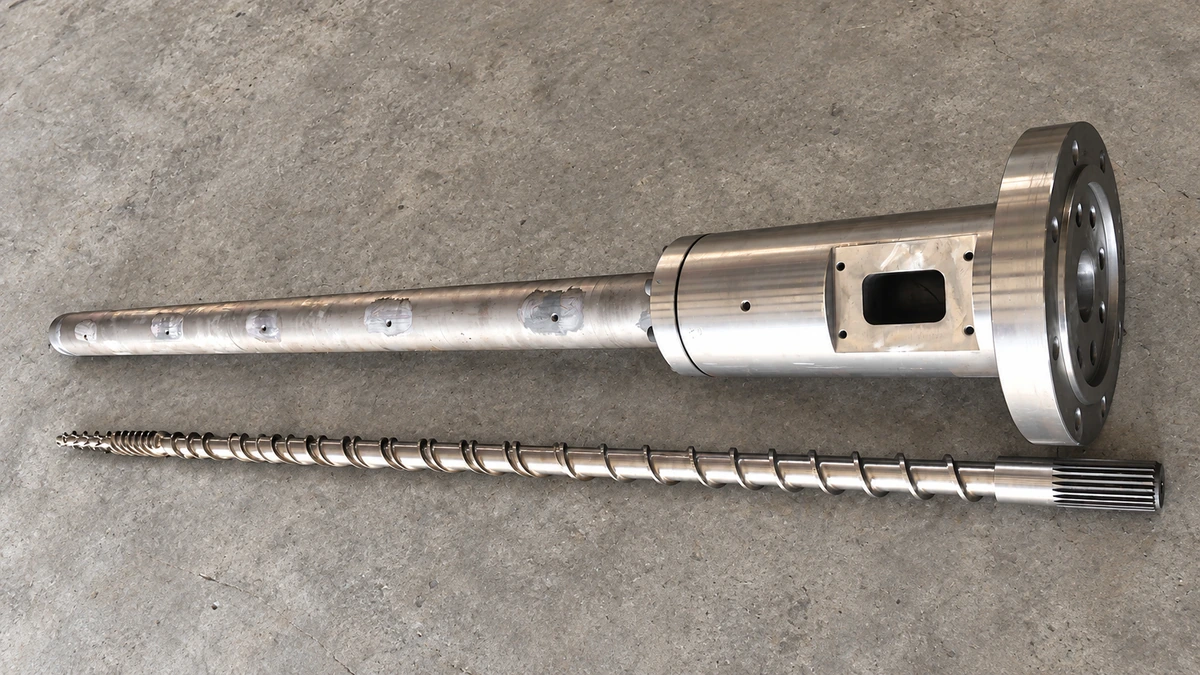
Why Your Single Screw Extruder Design Causes Extrusion Defects
Nov 13, 2026
Learn how single screw extruder design parameters—L/D ratio, compression ratio, channel depth, and mixing elements—affect melt quality, throughput, and defects.
Read Article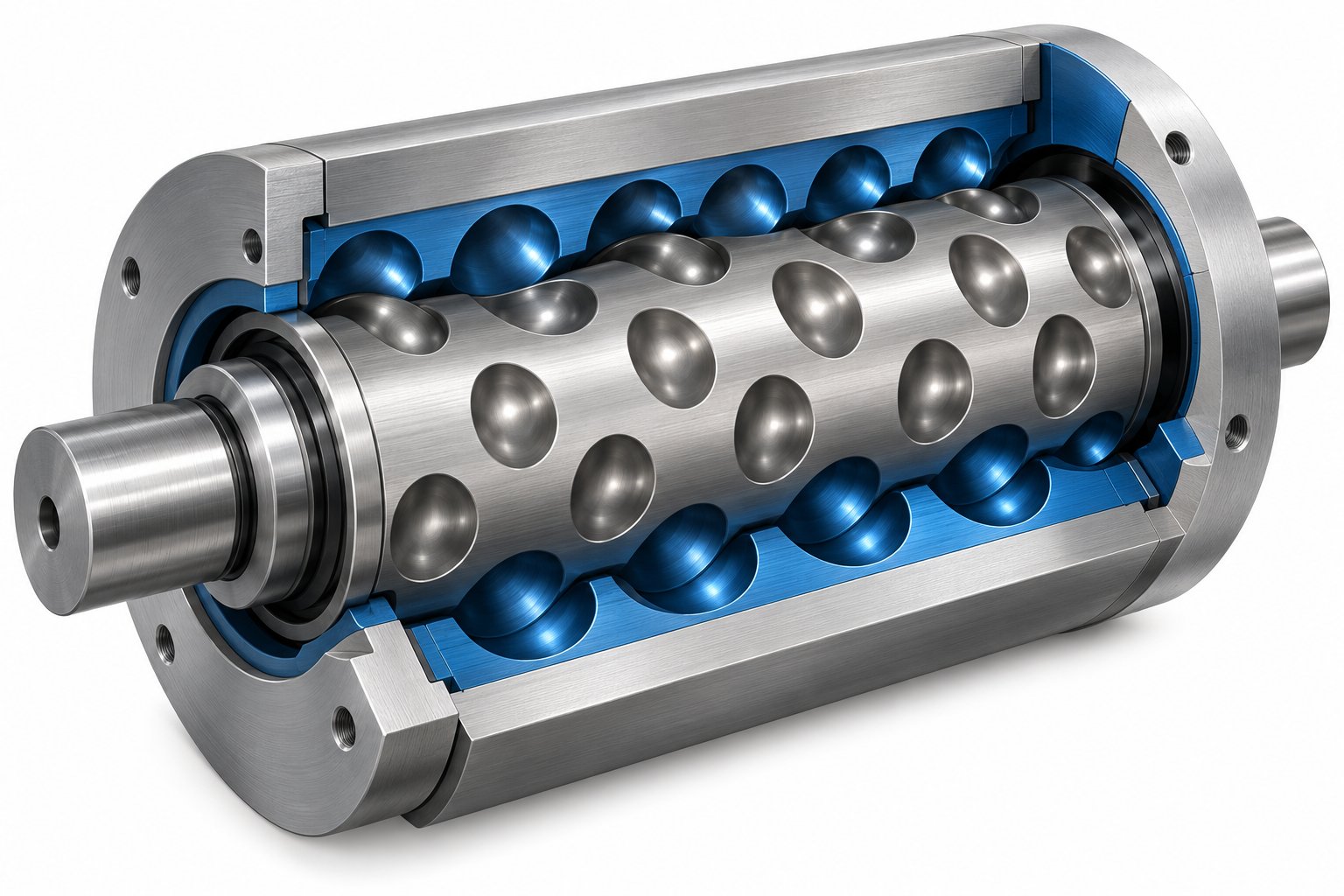
Cavity Transfer Mixer: The Blender Your Extruder Didn't Know It Needed
Nov 13, 2026
Learn how a cavity transfer mixer (CTM) upgrades single-screw extruder mixing. Covers working principles, key parameters, integration, applications, and comparisons.
Read Article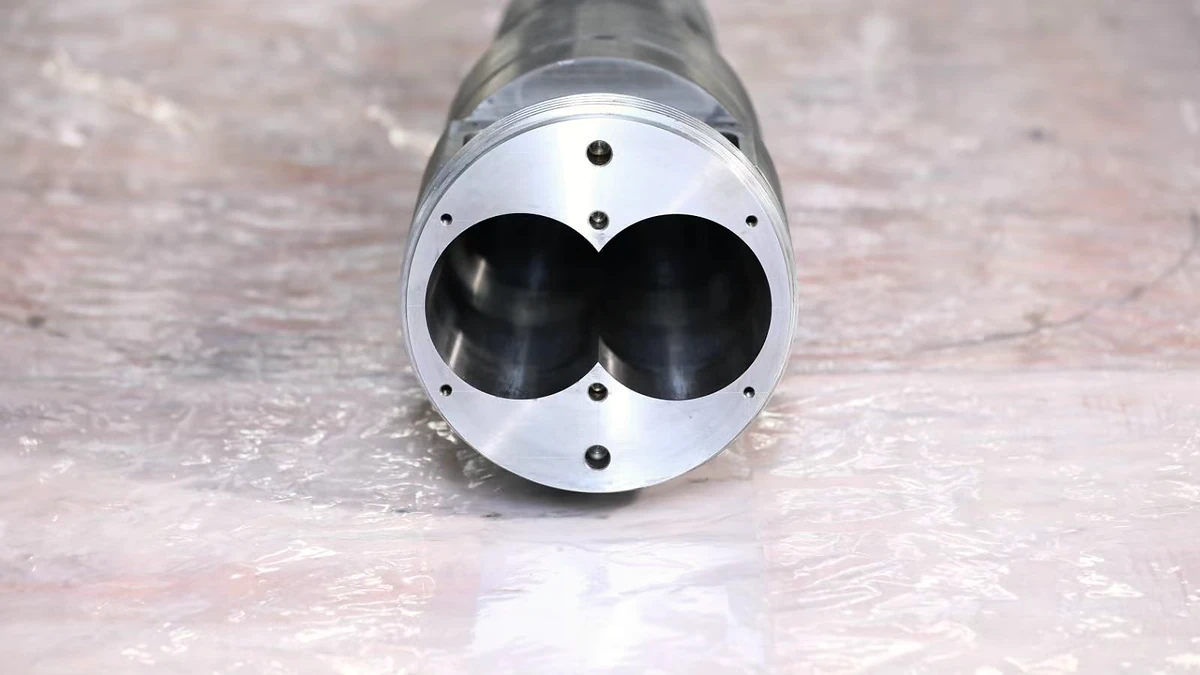
Extruder Barrel Alignment Decoded: Tolerances Most Plants Miss
Nov 13, 2026
Learn extruder barrel alignment tolerances, laser procedures, thermal offsets, and proactive schedules most plants miss — for single-screw and twin-screw lines.
Read ArticleLooking for something else?
Search by material, symptom or product and jump straight to the relevant page.
These are navigation suggestions based on keyword matching — not a quotation, not a delivery commitment, and not a substitute for engineering review. Final specification is confirmed by our engineers against your drawings and processed material.
Need help with screw barrel selection?
Share your machine model, processed material and application. Our team can help with pricing and technical support.