

What a Recycling Pelletizing Line Is and Why It Matters
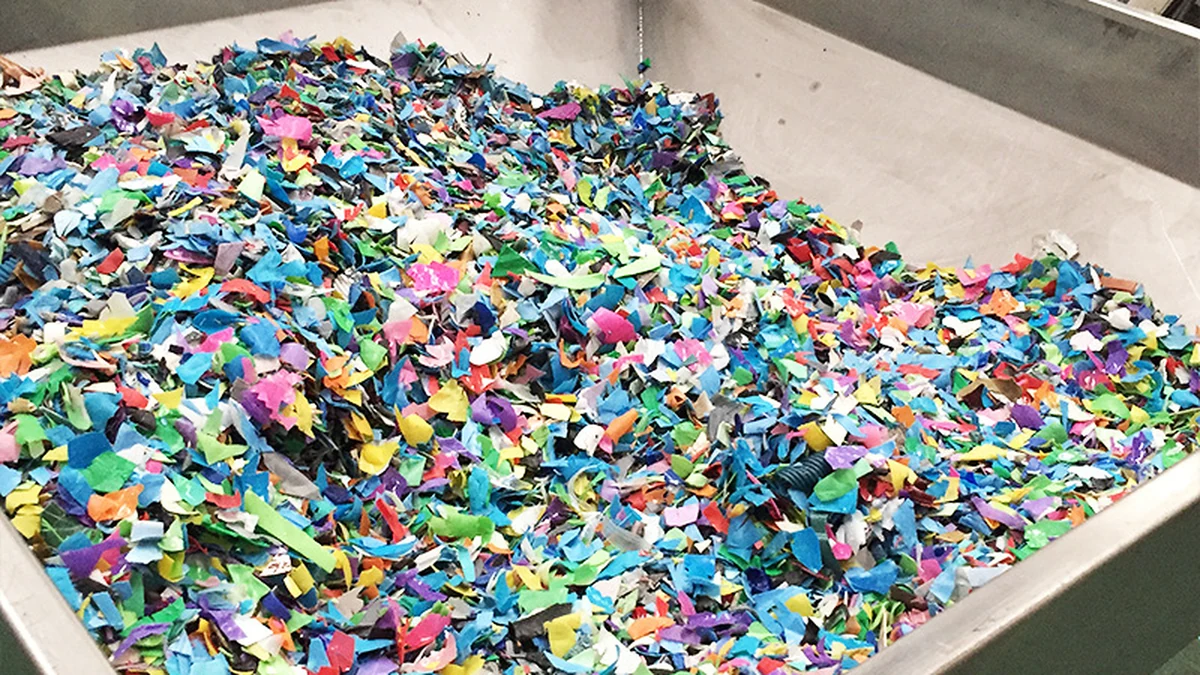
Imagine a bale of crushed milk jugs, tangled stretch wrap, or dirty PET bottle flake sitting on your factory floor. On its own, that scrap is worth very little. Injection molders will not accept it. Film extruders cannot feed it. Blow molders will not touch it. Yet run that same material through a properly engineered plastic pelletizing line, and it exits the other end as uniform, free-flowing pellets that compete directly with virgin resin in downstream manufacturing.
That transformation is exactly what a recycling pelletizing line delivers, and understanding what the term actually means is the first step toward making a smart investment.
What Exactly Is a Recycling Pelletizing Line
A recycling pelletizing line is a fully integrated production system — not a single machine — that converts post-consumer or post-industrial plastic waste into uniform, market-ready pellets through a coordinated sequence of size reduction, washing, drying, extrusion, melt filtration, pelletizing, cooling, and classification stages.
That definition matters more than it might seem at first glance. When most people search for information on plastic recycling pelletizing, they land on pages describing only the pelletizer — the cutting head that shapes molten polymer into small granules. A pelletizer is one station in a much larger workflow. It cannot function without the washing system that removes contaminants upstream, the extruder that creates a homogeneous melt, or the cooling and classification equipment that delivers a finished product downstream.
The complete line typically spans ten or more integrated stations arranged in sequence: infeed conveyors, shredders or granulators, washing systems (friction washers, hot wash tanks, float-sink separation), drying systems (centrifugal and thermal dryers), cutter compactors or agglomerators for film feedstocks, the extruder itself, degassing and venting zones, melt filtration via screen changers, the pelletizing head, cooling systems, vibrating screen classifiers, and finally storage silos with bagging stations. Each station's output feeds directly into the next, and a bottleneck or quality failure at any point ripples through every station downstream.
Why the Full Line Matters More Than the Pelletizer Alone
Here is a practical way to think about it. A waste plastic reclamation machine like a standalone pelletizer is analogous to an engine sitting on a workbench — powerful, yes, but useless without a transmission, chassis, fuel system, and wheels. The recycling pelletizing line is the complete vehicle.
This distinction carries real economic weight. The circular plastics economy depends on converting low-value baled scrap into high-value feedstock suitable for injection molding, blow molding, film extrusion, and fiber spinning. Recycled pellets that meet strict melt flow, contamination, and color specifications can command significantly higher prices per kilogram than loose regrind or unwashed flake. Achieving those specifications is not the job of any single machine — it is the result of every station in the line working in concert, from the moment raw waste enters the infeed to the moment bagged pellets leave the packaging station.
That end-to-end perspective shapes everything that follows in this guide. Rather than zooming in on one component, you will see how each stage — sorting, size reduction, washing, drying, extrusion, degassing, filtration, pelletizing, cooling, classification, and packaging — contributes to the quality and market value of the final pellet. The goal is straightforward: help you understand the full system so you can make better decisions about configuring, operating, and optimizing your own plastic pelletizing line.
Every line begins with raw material and ends with a finished pellet, but the path between those two points varies dramatically depending on the feedstock you process and the market you serve. The specific components that make up that path — and how each one influences the next — deserve a closer look.
Every Component in a Recycling Pelletizing Line Explained
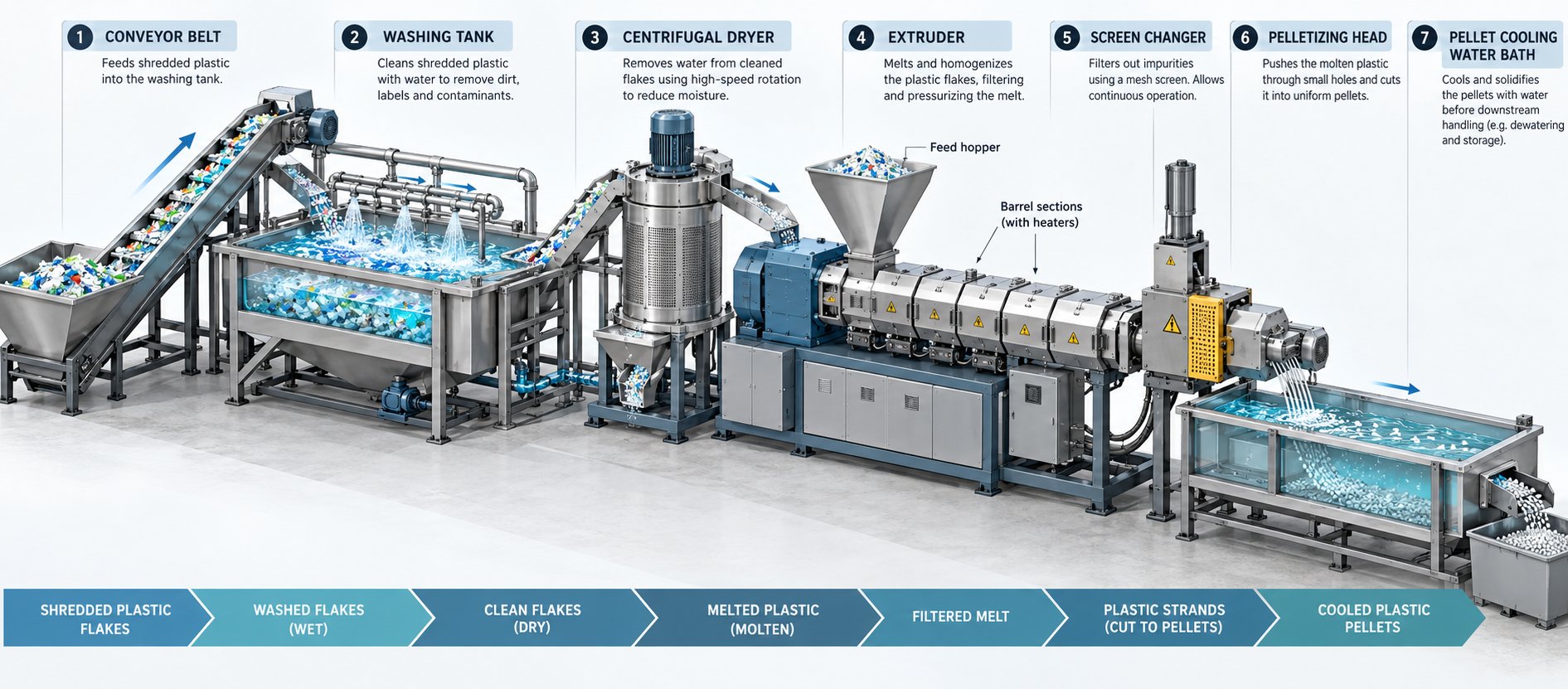
A recycling pelletizing line is only as strong as its weakest station. Skip one step or undersize a single machine, and the bottleneck punishes everything downstream — lower throughput, higher contamination, inconsistent pellets. So what does the full sequence actually look like, station by station?
Below is the complete process chain in the order material travels through it. Each station hands off a transformed product to the next, and every handoff carries a quality expectation that must be met for the final pellet to reach market specifications.
- Infeed and conveyor system — Meters raw bales, loose scrap, or pre-sorted flake onto the line at a controlled rate, preventing surges that starve or flood downstream equipment.
- Shredder or granulator — Reduces bulky waste into coarse pieces (shredder, typically 20-80 mm) and then into uniform flake (granulator, typically 8-12 mm). Consistent particle size is essential for even washing and stable extruder feeding.
- Washing system — Removes dirt, labels, adhesives, and incompatible polymers. This stage may include friction washers spinning at 600-1,500 RPM, hot wash tanks running caustic solution at 80-95 degrees Celsius for food-grade PET, and float-sink separation tanks that split materials by density — polyolefins float while PET and PVC sink.
- Drying system — Brings moisture down to levels safe for extrusion, generally below 1-3 percent depending on the resin. Centrifugal dryers handle the initial dewatering, followed by thermal dryers for final moisture removal. Excess moisture in the extruder creates bubbles, voids, and degraded pellet quality.
- Cutter compactor or agglomerator — Specifically for film, fiber, and raffia feedstocks. Loose film at 20-50 kg per cubic meter is nearly impossible to feed into an extruder consistently. An agglomerator uses friction heat from high-speed rotating blades to shrink and densify the film into irregular granules reaching 250-400 kg per cubic meter — a five- to tenfold density gain. For film-based lines, this station often replaces or supplements the shredder as a pre-densification step, ensuring the extruder receives a stable, free-flowing feed rather than fluffy material that bridges in the hopper.
- Extruder — The heart of any pelletizing machine plastic processors rely on. The extruder melts, homogenizes, and pressurizes the clean, dry feedstock into a consistent polymer melt. Screw design, L/D ratio, and barrel metallurgy determine melt quality, throughput, and energy consumption.
- Degassing and venting zones — Volatiles, trapped moisture, and odor-causing compounds are extracted from the melt through vacuum venting ports along the barrel. Inadequate degassing results in porous pellets and off-odors that limit end-use applications.
- Melt filtration and screen changer — Removes remaining solid contaminants — paper fragments, wood particles, rubber, aluminum, or foreign plastics — from the molten stream. Mesh size for screen changers typically ranges from 80 to 200 mesh depending on target pellet purity. Automatic continuous-backflush or laser-drilled screen disc systems minimize downtime by cleaning themselves without stopping production, a critical advantage for post-consumer recycling applications where contamination loads can reach 3-5 percent.
- Pelletizing head — Cuts the filtered melt into uniform pellets, typically 2-4 mm in diameter. The pelletizing method — strand, water-ring, underwater, or hot-die-face — shapes pellet geometry, throughput, and suitability for specific resins.
- Cooling system — Solidifies and tempers pellets via water bath, air cooling, or a combination. Uneven cooling causes pellet deformation, sticking, or internal stress that leads to size variation during classification.
- Vibrating screen classifier — Sorts pellets by size, removing oversized lumps, fines, and dust. This ensures the packaged product meets the tight dimensional tolerances buyers expect.
- Storage silos and bagging station — Holds classified pellets before packaging into bags, octabins, or bulk containers, completing the transformation from raw waste to a sellable commodity.
From Raw Bales to the Extruder Feed Zone
The first five stations — infeed through agglomerator — exist for one purpose: preparing feedstock that the extruder can process cleanly and consistently. Imagine feeding a dirty, wet, irregularly sized mix of plastic scrap directly into an extruder. The result would be rapid screw and barrel wear from abrasive grit, steam explosions from trapped moisture, wildly inconsistent melt viscosity, and contaminants that clog every downstream filter. Proper pre-processing eliminates these problems before they start.
You will notice that the washing and drying stations carry especially strict targets. Hot washing with caustic solution is non-negotiable for post-consumer PET destined for food-contact applications. Drying to below one percent moisture matters for nearly every resin — even small amounts of water in the melt generate hydrolytic degradation in PET or foaming in polyolefins. Getting these steps right is what separates high-value plastic pelletizing operations from those that produce off-spec material no one wants to buy.
Extrusion Through Pelletizing and Final Packaging
Once clean, dry feedstock enters the extruder, the focus shifts from contamination removal to melt quality and pellet uniformity. The extruder pelletizer combination — from screw tip to cutting head — determines the physical and mechanical properties of every pellet that leaves the line. Degassing zones pull volatiles out of the melt. The screen changer intercepts any solid contaminants that survived upstream washing. The pelletizing head shapes the melt into its final form, and the cooling system locks that shape in place.
Each of these stations operates within a narrow process window. Die temperature, cutting speed, water flow rate, and screen mesh size all interact. A screen changer running too fine a mesh at high throughput creates excessive back pressure that overheats the melt. A cooling system that quenches pellets too aggressively can trap internal stress that causes cracking during storage. The vibrating screen classifier at the end acts as the final quality gate, rejecting anything that falls outside specification before it reaches the bagging station.
How Upstream Quality Drives Downstream Pellet Output
The most important principle in any recycling pelletizing line is this: every quality shortfall upstream compounds downstream. The table below maps each station to its primary function, the key specification operators should monitor, and the direct impact on the finished pellet.
| Station | Primary Function | Key Specification | Impact on Pellet Quality |
|---|---|---|---|
| Infeed / Conveyor | Controlled, consistent material feed | Feed rate stability (kg/hr variance) | Prevents extruder surging and inconsistent pellet weight |
| Shredder / Granulator | Size reduction to uniform flake | Output particle size (8-12 mm typical) | Uneven flake sizes cause inconsistent washing, drying, and extruder feeding |
| Washing System | Contaminant and foreign-polymer removal | Residual contamination level (ppm); wash temperature | Inadequate washing raises ash content, increases filter changes, and degrades pellet color |
| Drying System | Moisture removal before extrusion | Residual moisture (target below 1-3%) | Excess moisture causes voids, bubbles, and hydrolytic degradation in the melt |
| Agglomerator / Cutter Compactor | Densification of film and fiber feedstocks | Output bulk density (250-400 kg/m³) | Low-density feed starves the extruder, causing output fluctuation and inconsistent pellet size |
| Extruder | Melting, mixing, and pressurizing polymer | L/D ratio; screw speed; melt temperature | Poor melt homogeneity results in inconsistent MFI and mechanical properties in pellets |
| Degassing / Venting Zones | Volatile and moisture extraction from the melt | Vacuum level (mbar); number of venting ports | Insufficient degassing causes pellet porosity, odor, and limited end-use suitability |
| Melt Filtration / Screen Changer | Solid contaminant removal from molten polymer | Screen mesh size (80-200 mesh typical) | Worn or too-coarse screens allow contaminant pass-through, reducing pellet purity grade |
| Pelletizing Head | Cutting melt into uniform pellet geometry | Die hole diameter; cutter speed | Worn die plates or mismatched speed produce irregular pellet shapes and tails |
| Cooling System | Pellet solidification and tempering | Coolant temperature; residence time | Uneven cooling creates deformed pellets, internal stress, and size variation |
| Vibrating Screen Classifier | Size sorting and fines removal | Screen aperture size; vibration frequency | Bypassing classification allows oversized or undersized pellets into the final product |
| Storage Silos / Bagging | Pellet storage and packaging | Silo capacity; moisture ingress prevention | Poor storage conditions reintroduce moisture and contamination before shipment |
Notice how the table reveals a cascading dependency. Dirty flake from a poorly performing wash station forces more frequent screen changes at the melt filter, which increases downtime and reduces throughput. Wet feedstock from an undersized dryer generates steam in the extruder barrel, degrading polymer chains and producing weak, discolored pellets. An agglomerator that inconsistently densifies film sends irregular feed to the extruder, which responds with surging melt pressure and pellets that vary in size from one minute to the next.
This cascading effect is precisely why the best operators think in terms of line integration rather than individual machines. Every purchasing decision, every maintenance schedule, and every process setting should be evaluated by asking a single question: how does this affect the pellet that comes out at the end?
With the full station map in place, one decision stands out as particularly consequential — the choice of extruder type. It determines how effectively your line can handle contaminated feedstocks, incorporate additives, and deliver a consistent melt to the pelletizing head.
Choosing the Right Extruder Type for Your Recycling Line
The extruder sits at the center of every recycling pelletizing line, yet the selection process rarely receives the attention it deserves. Four distinct extruder architectures dominate plastic pelletizing equipment today, and each one excels under different feedstock conditions. Picking the wrong type does not just reduce efficiency — it caps pellet quality at a level no amount of downstream tuning can fix.
Single-Screw vs. Twin-Screw vs. Co-Kneader for Recycling
A single-screw extruder relies on one rotating screw to convey, melt, and pressurize the polymer. Its mechanical simplicity translates into lower capital cost, easier maintenance, and excellent energy efficiency — provided the feedstock is clean, pre-sorted, and requires minimal compounding. Think post-industrial film trim or clean rigid regrind. Over 90 percent of screws used in straightforward recycling processes are single-shaft designs, and for good reason: when the input stream is consistent, nothing matches their cost-effectiveness.
Contaminated post-consumer waste tells a different story. Mixed polyolefins, printed films, and materials requiring additive incorporation or intensive degassing push a single screw beyond its design envelope. A parallel twin-screw extruder — two co-rotating, intermeshing screws — delivers superior dispersive mixing, multiple venting zones for deep degassing, and the flexibility to side-feed fillers, colorants, or stabilizers at precise barrel positions. That makes it the workhorse for any plastic pelletizer handling challenging post-consumer streams or masterbatch production.
Conical twin-screw extruders taper from a large feed diameter to a smaller discharge end, creating a natural compression zone well suited to rigid PVC recycling. The tapered geometry generates high torque at moderate screw speeds, which is critical for heat-sensitive PVC that degrades quickly under excessive shear. If your line centers on PVC pelletizing, the conical configuration is a proven match.
A fourth option — the co-kneader — uses a single screw that oscillates axially while rotating, producing gentle but thorough distributive mixing. Co-kneaders excel with highly filled compounds (calcium carbonate or wood-fiber composites above 70 percent fill) and shear-sensitive polymers where aggressive twin-screw mixing would degrade the matrix. Their niche is narrow but valuable in specialty recycling scenarios.
| Extruder Type | Best Feedstock Match | Mixing Intensity | Degassing Capability | Throughput Range | Typical Applications |
|---|---|---|---|---|---|
| Parallel twin-screw (co-rotating) | Contaminated post-consumer waste, blends, materials needing additive incorporation | Excellent — dispersive and distributive | Strong — multiple vacuum venting zones | Medium to high (200 – 3,000+ kg/hr) | Post-consumer polyolefin compounding, masterbatch, pet pelletizing with IV stabilizers, color concentrates |
| Single-screw | Clean, pre-sorted post-industrial scrap with minimal compounding needs | Basic — limited to Dalmage or Maddock mixer sections | Limited — single vent port typical | Medium to high (150 – 2,000+ kg/hr) | Post-industrial film regrind, clean HDPE/PP rigid flake, LDPE reprocessing |
| Conical twin-screw (counter-rotating) | Rigid PVC, heat-sensitive polymers | Moderate — controlled shear with high torque | Moderate — typically one vent zone | Low to medium (100 – 900 kg/hr) | PVC pipe regrind, PVC profile scrap, window-frame recycling |
| Co-kneader | Highly filled or shear-sensitive compounds | Gentle distributive mixing; low shear | Moderate — axial oscillation aids venting | Low to medium (50 – 800 kg/hr) | Wood-plastic composites, heavily filled masterbatch, cable compounds |
How Screw and Barrel Design Shapes Pellet Quality
Selecting the right extruder type is only half the equation. The screw-and-barrel combination inside that extruder determines melt homogeneity, throughput stability, and ultimately pellet consistency.
Three design variables deserve close attention:
- L/D ratio — A longer screw relative to its diameter provides more residence time for melting, mixing, and degassing. Recycling applications commonly use L/D ratios of 32:1 to 44:1 on twin-screw systems. Shorter ratios suit easy-melt resins like LDPE where thermal degradation from excessive residence must be avoided, while longer ratios benefit contaminated streams that need extended degassing and additive dispersion.
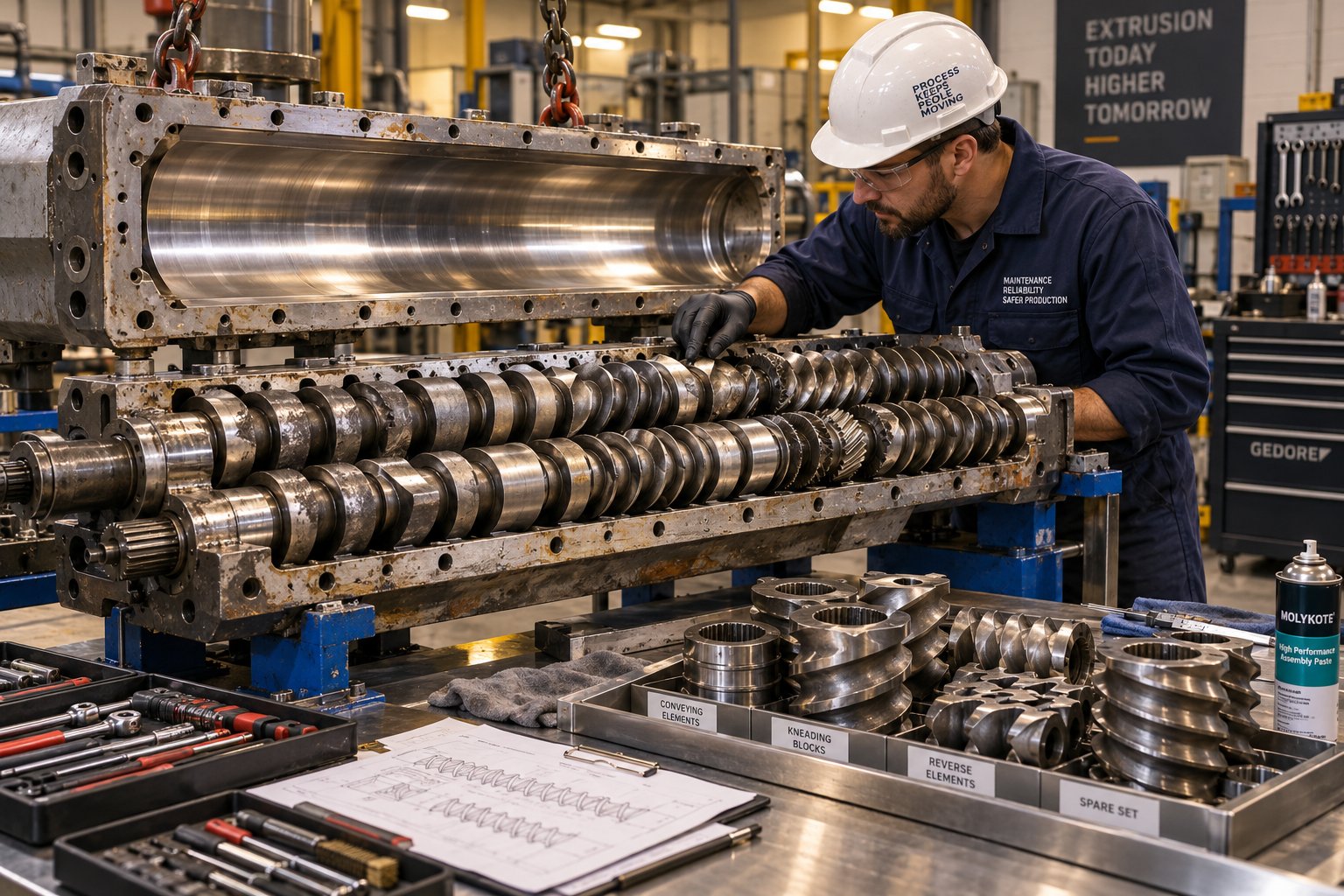
- Screw element configuration — Twin-screw systems use modular, segmented screw elements — conveying elements, kneading blocks, reverse-flight elements — that can be rearranged to match each feedstock's specific demands. Need more shear for dispersing pigment agglomerates? Stack additional kneading blocks. Need longer degassing zones for odor reduction? Insert open-flight conveying elements beneath the vacuum port. This modularity is one of the parallel twin-screw extruder's strongest advantages over a single-screw design, where the screw is typically a single machined piece.
- Barrel metallurgy and wear resistance — Recycled feedstocks are inherently abrasive. Sand, glass fragments, paper fiber, calcium carbonate residue, and metallic traces all erode screw flights and barrel bores over time. Fillers like calcium carbonate, talc, and glass fiber accelerate screw wear dramatically compared to pure resin processing. Nitrided steel barrels work adequately for general recycling, but heavily contaminated or mineral-filled streams may require bimetallic linings, powder-metallurgy coatings, or other high-hardness treatments that extend barrel life under punishing conditions. Suppliers like NANHAIYA engineer custom parallel twin screw barrels with wear-resistant linings and tailored screw element configurations specifically for these demanding recycling, compounding, and masterbatch applications — a practical consideration when planning long-term maintenance budgets for abrasive feedstock processing.
When barrel bores wear beyond tolerance, the clearance between screw flight and barrel wall increases. That widening gap allows molten polymer to slip backward instead of being conveyed forward, reducing throughput and raising specific energy consumption per kilogram. Melt homogeneity suffers as well, because the leakage flow creates uneven residence times. In severe cases, worn barrels and screws can increase energy use by 10 to 20 percent before operators even notice the throughput drop — a hidden cost that erodes margins quietly.
The practical takeaway? Match the extruder type to your feedstock complexity, then spec the screw layout and barrel metallurgy to the specific contaminants in your stream. That combination — the right architecture with the right internals — is what separates plastic pelletizing equipment that delivers premium pellets year after year from systems that produce off-spec material and burn through wear parts every few months.
Of course, what happens to the melt after it leaves the extruder barrel matters just as much. The pelletizing method you pair with your extruder determines pellet shape, throughput ceiling, and which end-use markets you can serve — a choice that deserves its own detailed comparison.
Pelletizing Technologies Compared: Choosing the Right Plastic Pelletizer Machine
Four cutting methods dominate the pelletizing stage of a recycling line, and every other decision — resin choice, throughput target, downstream buyer spec — funnels through this single selection point. So what is a pelletizer actually doing at the die face, and why does the cutting technique matter so much?
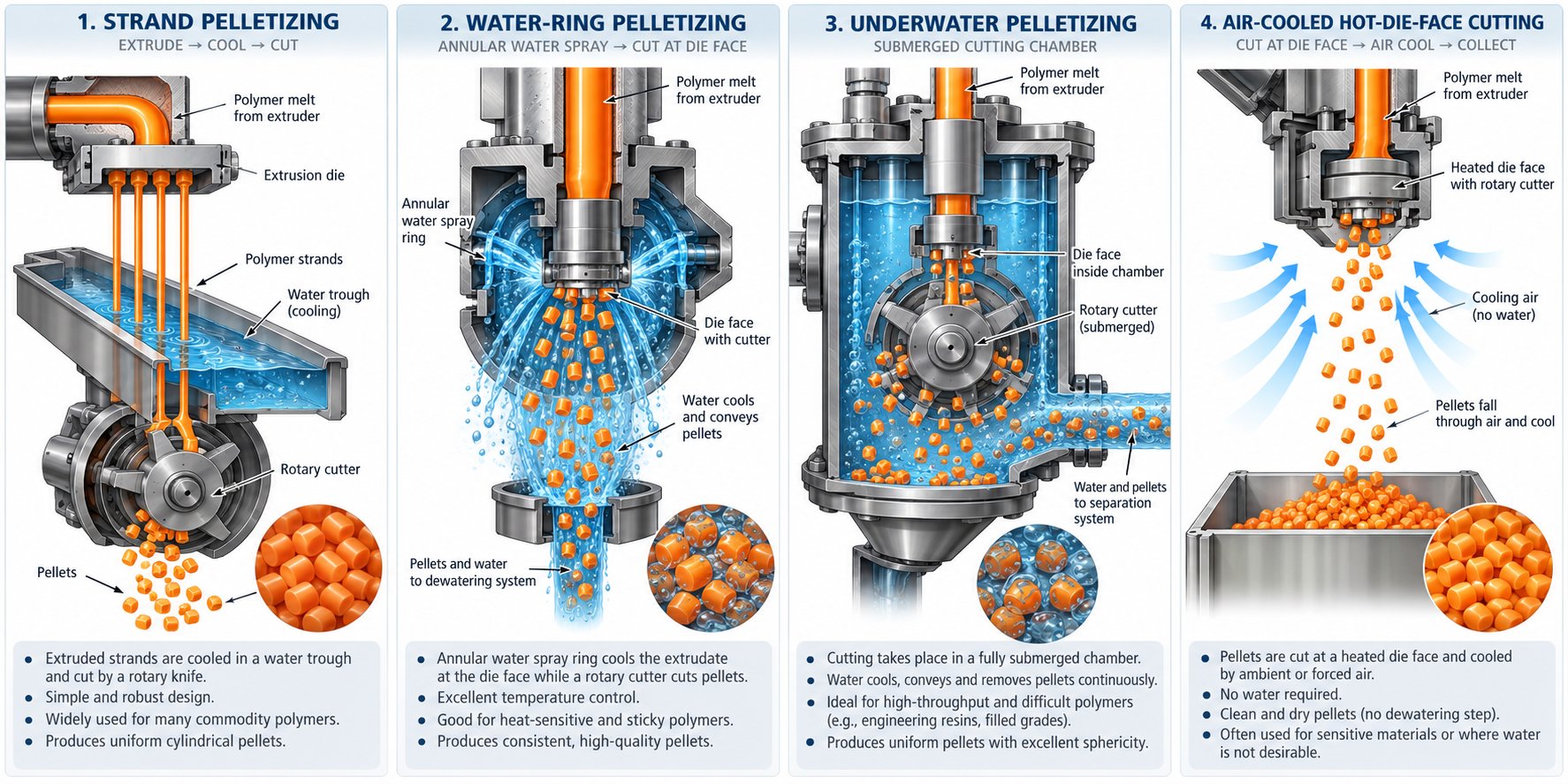
The core distinction is simple: when the blade meets the polymer relative to when cooling occurs. That timing difference — cut before or after solidification — dictates pellet shape, surface finish, throughput ceiling, and which resins the system can handle. The four methods split neatly into two families. Cold cutting (strand pelletizing) solidifies the polymer first, then chops it. Hot cutting (water-ring, underwater, and air-cooled hot-die-face) shears the melt right at the die and quenches it afterward. Each approach carries trade-offs worth examining in detail.
Strand vs. Water-Ring vs. Underwater vs. Hot-Die-Face Cutting
Strand pelletizing extrudes molten polymer through a multi-hole die plate into continuous strands that travel through a water bath or trough. Once solidified, the strands pass through a dewatering unit and into a rotary cutter that chops them into cylindrical pellets. Because the blade cuts against hardened plastic rather than molten material, tooling wear stays low and blade changes take minutes. The trade-off? Startup labor is significant — operators may need to string dozens of individual strands, and any strand that breaks during a run creates scrap until it is re-threaded. Strand systems remain the most cost-effective plastic pelletizing machine for clean, rigid feedstocks like HDPE bottle flake, PP regrind, and ABS.
Water-ring pelletizing takes a different approach. Rotating knives shear the molten polymer directly at the die face while a high-velocity annular water ring immediately quenches each freshly cut pellet. The still-soft pellets ride the water stream into a centrifugal dryer. This method works best with resins that have enough melt strength to hold their cut shape for the split second before water hits them — polyolefins and polystyrene are ideal candidates. High-temperature or sticky resins like PET and polyamide fall outside the working window because they either freeze at the die too quickly or remain tacky long enough to agglomerate. For many recyclers processing PE and PP streams at moderate volumes, water-ring pelletizers offer a practical middle ground: better pellet geometry than strand, lower capital cost than underwater.
Underwater pelletizing (UWP) submerges the entire cutting chamber in pressurized process water. Knives shear the melt at the die face while the polymer is already surrounded by fluid. Surface tension pulls each freshly cut droplet into a near-perfect sphere before the water quenches it solid — a phenomenon that no other method replicates. Process water temperature must be carefully balanced to the selected polymer's properties; failure to maintain that balance is a leading cause of malformed or worm-like pellets. UWP handles virtually any polymer family, produces the tightest size distribution, and is the only method capable of generating the sub-millimeter micropellets used in masterbatch and rotomolding. It is the preferred choice for PET recycling — especially bottle-to-bottle lines feeding solid-state polymerization (SSP) reactors, where spherical pellet geometry ensures uniform heat transfer and IV buildup. The trade-off is complexity: pressurized water boxes, polymer diverter valves, automated PLC controls, and water-treatment systems all add capital cost.
Air-cooled hot-die-face cutting fills a niche that the other three methods cannot easily reach. Knives cut the melt at the die face — similar to water-ring — but pellets fall freely and are cooled by ambient or forced air rather than water. This eliminates any risk of moisture contamination, making it the go-to solution for materials that stick or clump on contact with water: soft LDPE film with high melt flow index, EVA, hot-melt adhesives, and certain thermoplastic elastomers. Throughput is lower and pellet shape is less uniform (typically lens or teardrop rather than true sphere), but for water-sensitive feedstocks, air-cooled cutting is often the only viable path.
| Pelletizing Method | Working Principle | Best-Suited Resins | Pellet Shape | Typical Throughput Range | Water Usage | Capital Cost Level | Advantages | Disadvantages | Common Recycling Applications |
|---|---|---|---|---|---|---|---|---|---|
| Strand pelletizing | Strands extruded, cooled in water bath, then cut by rotary blade after solidification | HDPE, PP, ABS, PS, PC, PVC, engineering plastics | Cylindrical with flat ends | 100 – 20,000 kg/hr | Moderate (open water bath) | $ (lowest) | Low capital cost; fast blade changes; easy resin changeover; wide material compatibility | High startup labor (strand stringing); dropped strands cause scrap; cylindrical shape can bridge in hoppers | Clean rigid HDPE/PP regrind, post-industrial ABS scrap, PVC pipe regrind, toll compounding with frequent changeovers |
| Water-ring pelletizing | Melt cut at die face by rotating knives; annular water ring quenches pellets immediately | PE, PP, PS, polyolefin masterbatch | Lens / oval (aspirin-tablet shape) | 150 – 5,000 kg/hr | Low to moderate (closed-loop ring) | $$ (mid-range) | Good pellet uniformity; compact footprint; simpler than UWP; lower capital than underwater | Limited to high-melt-strength resins; unsuitable for PET, PA, or sticky compounds; throughput ceiling lower than strand or UWP | PE/PP film recycling, woven bag recycling, polyolefin masterbatch, general polyolefin pelletizing under 5,000 kg/hr |
| Underwater pelletizing (UWP) | Entire cutting chamber submerged in pressurized process water; melt cut and quenched simultaneously | PET, PA, PE, PP, masterbatch, TPE — virtually any polymer | Spherical (true sphere via surface tension) | 300 – 31,750 kg/hr | High (pressurized closed-loop system with filtration and tempering) | $$$ (highest) | Widest resin compatibility; tightest pellet size distribution; spherical shape optimizes bulk density and flow; only method for micropellets; highly automatable | Highest capital cost; complex water-treatment system; die freeze-off risk; specialized maintenance (water box, hydraulics, PLC) | PET bottle-to-bottle with SSP, high-MFI polyolefin compounding, masterbatch micropellets, engineering plastic compounds, polyamide recycling |
| Air-cooled hot-die-face | Melt cut at die face; pellets cool by falling through ambient or forced air stream | Soft LDPE film, LLDPE, EVA, hot-melt adhesives, TPE, water-sensitive compounds | Lens / teardrop (slightly irregular) | 80 – 800 kg/hr | None | $ to $$ (low to mid) | No water contact eliminates moisture risk; simple operation; lowest energy for drying; forgiving process window | Lowest throughput ceiling; less uniform pellet geometry; limited to soft or water-sensitive materials | Post-consumer LDPE film with high MFI, EVA scrap recycling, foam recycling, adhesive reprocessing |
Matching Pelletizing Method to Resin and End-Use Market
Pellet geometry is more than cosmetic — it directly determines how the material behaves in downstream processing and storage. Cylindrical strand pellets have flat ends that can interlock and bridge in narrow hopper throats, a nuisance for high-speed injection molding feeders. Lens-shaped water-ring pellets flow more freely but pack at lower bulk density than spheres. Spherical underwater pellets pack the densest, flow the most reliably into feed throats, and deliver the most uniform heat transfer in applications like SSP reactors or rotomolding ovens.
Consider PET destined for bottle-grade solid-state polymerization. Cylindrical or lens-shaped pellets create uneven gas diffusion and heat distribution inside an SSP reactor because their irregular geometry produces inconsistent residence times. Spherical pellets, tested against ASTM D1921-18 sieve analysis standards, deliver the predictable IV buildup that bottle-grade buyers require. If your end customer operates an SSP line, the pelletizing method is effectively predetermined.
For polyolefin recyclers selling pelletized HDPE or PP into commodity markets — pipe fittings, crates, non-critical injection molding — the lens shape from a water-ring system is perfectly acceptable and keeps capital investment manageable. Strand pelletizers remain the pragmatic choice for toll compounders running dozens of color or resin changes per month, where fast changeover and low tooling cost outweigh the limitations of a cylindrical pellet shape.
Bulk density follows the same pattern. Spherical pellets from underwater systems typically achieve the highest bulk density, which translates to more kilograms per shipping container and lower logistics cost per ton. For high-volume operations shipping internationally, that density advantage alone can offset a meaningful portion of the higher equipment investment.
The right pelletizing method, then, is not the most expensive or the most technically advanced — it is the one that aligns your resin chemistry, throughput requirement, and target buyer specification into a single coherent system. And that alignment depends heavily on one more variable most guides overlook: the specific feedstock stream your line is built to process and the contamination profile it carries.
How to Match Your Line Configuration to Each Feedstock
A strand pelletizer paired with a single-screw extruder is a proven combination — but only if your feedstock cooperates. Feed agricultural film into that same setup and you will fight hopper bridging, erratic melt pressure, and pellets that look like they went through a blender blindfolded. The reality is that no single line layout handles every plastic waste stream equally well. Each feedstock carries its own contamination profile, bulk density, moisture behavior, and thermal sensitivity, and the extrusion pelletizing machine configuration must reflect those differences from the very first station.
Think of it this way: your feedstock defines the problem, and your line layout is the engineered answer. Choosing plastic pelletizers without first characterizing the input material is like prescribing medicine without diagnosing the patient.
Configuring Lines for Film, Rigid, PET, and Foam Feedstocks
Five feedstock scenarios cover the vast majority of recycling operations worldwide. Each demands a distinct combination of pre-processing, extrusion, and pelletizing technology.
Mixed rigid HDPE — milk jugs, detergent bottles, crates — arrives as baled or loose regrind loaded with paper labels, sand, adhesive residue, and occasional metal caps. The line needs aggressive shredding followed by a full hot-wash cycle with friction washers and float-sink separation to strip labels and sink heavier contaminants. Drying targets below two percent moisture. A single-screw extruder handles the melt well because HDPE is forgiving, but robust melt filtration (continuous-backflush screen changers at 120-150 mesh) is non-negotiable due to the high particulate load. Strand pelletizing keeps costs manageable and produces the cylindrical pellets commodity buyers expect.
Agricultural PP film and PP raffia — woven bags, baler twine, crop covers — share a common challenge with all film feedstocks: extremely low bulk density. Loose film at 30-50 kg per cubic meter simply cannot feed an extruder consistently. An agglomerator or cutter compactor is essential here, converting fluffy shredded film into dense, free-flowing granules before extrusion. Agricultural film also carries heavy soil and sand contamination, so a multi-stage wash line including pre-wash, friction wash, and float-sink separation precedes drying. A single-screw extruder works for clean streams, but heavily contaminated agricultural PP benefits from a parallel twin-screw system with multiple degassing zones to remove trapped volatiles and moisture. Water-ring pelletizing offers a practical middle ground — good pellet shape at moderate capital cost.
Post-consumer PET bottle flake is arguably the most technically demanding feedstock to pelletize correctly. PET is hygroscopic, meaning it absorbs ambient moisture rapidly, and any residual water triggers hydrolytic degradation during extrusion — slashing the intrinsic viscosity (IV) that bottle-grade buyers depend on. The line must include crystallization drying equipment that brings moisture well below 50 ppm before the flake ever touches the extruder. Crystallization drying followed by double vacuum degassing is a standard configuration for PET recycling lines, ensuring both moisture removal and volatile extraction. A single-screw extruder with deep-vacuum venting zones handles PET efficiently, while underwater pelletizing is the preferred cutting method — the spherical pellet geometry it produces ensures uniform heat transfer in downstream solid-state polymerization (SSP) reactors that restore IV to bottle-grade levels.
LDPE/LLDPE stretch film — pallet wrap, shrink film, greenhouse covers — presents the same bulk-density challenge as PP film but adds another wrinkle: LDPE's low melting point and high melt flow index make it prone to sticking and agglomeration during cooling. A typical post-consumer LDPE recycling process includes shredding, multi-stage washing, dewatering, drying, densifying, extrusion, melt filtration, degassing, and pellet cutting. The agglomeration step is critical — without it, the extruder starves on low-density fluff. Clean post-industrial LDPE trim may skip washing entirely and move straight from shredding to agglomeration and extrusion. Water-ring or air-cooled hot-die-face pelletizing both work for LDPE, with the air-cooled option eliminating moisture pickup for particularly soft or tacky grades.
PS/EPS foam — expanded polystyrene from packaging, insulation, and food-service containers — requires a fundamentally different front end. Foam arrives at bulk densities as low as 10-30 kg per cubic meter, making conventional shredding and conveying impractical without densification. A thermal densifier or screw compactor melts and compresses the foam into solid ingots or dense strands, reducing volume by a factor of 30 to 50 before the material enters a conventional extruder. Melt filtration removes residual dirt and coatings, and strand pelletizing is the standard cutting method for general-purpose recycled PS. The resulting pelletized plastic serves injection molding markets for picture frames, office accessories, and packaging inserts.
| Feedstock Type | Key Pre-Processing Steps | Recommended Extruder Type | Recommended Pelletizing Method | Special Considerations |
|---|---|---|---|---|
| Mixed rigid HDPE (bottles, crates) | Shredding, hot wash, friction wash, float-sink separation, centrifugal + thermal drying | Single-screw (clean streams) or parallel twin-screw (heavily contaminated) | Strand pelletizing | High particulate load demands robust continuous-backflush melt filtration at 120-150 mesh; label and adhesive residue raises ash content if wash is inadequate |
| Agricultural PP film / PP raffia | Shredding, multi-stage washing (pre-wash, friction wash, float-sink), drying, agglomeration or cutter compactor | Single-screw (moderate contamination) or parallel twin-screw (heavy soil/volatile load) | Water-ring pelletizing | Agglomerator is essential for densification; sand and soil cause severe screw/barrel wear; multiple degassing zones needed for agricultural film with trapped organics |
| Post-consumer PET bottle flake | Sorting, hot caustic wash, float-sink separation, crystallization drying to below 50 ppm moisture | Single-screw with deep vacuum venting (double degassing) | Underwater pelletizing (UWP) | Crystallization drying is mandatory to prevent IV loss; spherical pellets required for SSP reactor compatibility; SSP or LSP may follow pelletizing to restore bottle-grade IV |
| LDPE / LLDPE stretch film | Shredding, washing (if post-consumer), dewatering, thermal drying, agglomeration / densification | Single-screw (clean trim) or parallel twin-screw (printed or contaminated film) | Water-ring or air-cooled hot-die-face | Low bulk density requires agglomeration before extrusion; clean post-industrial trim may skip washing; soft grades benefit from air-cooled cutting to avoid moisture pickup |
| PS / EPS foam | Thermal densification or screw compaction (volume reduction 30:1 to 50:1), optional washing | Single-screw | Strand pelletizing | Foam must be densified before conventional extrusion; extremely low incoming bulk density (10-30 kg/m³) makes standard infeed systems impractical without compaction |
Single-Pass vs. Multi-Pass Processing for Different Contamination Levels
Contamination level draws a sharp operational line that many equipment guides gloss over. Clean post-industrial scrap — edge trim, startup purge, off-spec parts from a known production run — typically enters the line with minimal contamination and consistent polymer composition. Post-industrial recycled plastic is typically of fairly good quality because it never reached the consumer and avoided exposure to food residue, UV degradation, and mixed-material contamination. These streams often qualify for single-pass processing: shred, dry if needed, extrude, filter, pelletize, done. No washing line. No agglomeration. Minimal filtration. The result is a fast, energy-efficient path to pelletized plastic with near-virgin properties.
Post-consumer waste is a different animal. Material collected from curbside bins, MRFs, or agricultural collection programs carries variable contamination — food residue, paper labels, mixed polymers, sand, moisture, odor compounds, and degraded polymer chains from UV exposure. A single pass through a basic extrusion pelletizing machine rarely produces pellets that meet buyer specifications. Instead, these streams demand enhanced or multi-pass configurations:
- Enhanced single-pass — A full wash line, deep drying, twin-screw extrusion with multiple degassing zones, fine melt filtration (150-200 mesh), and aggressive pellet classification. This works for moderately contaminated post-consumer streams where thorough upstream cleaning can bring contaminants within acceptable limits before a single extrusion pass.
- Double extrusion (tandem or cascade) — The material passes through a primary extruder for initial melting and coarse filtration, then transfers directly into a secondary extruder for fine degassing, additive incorporation, and precision filtration. Tandem systems are common in PET bottle-to-bottle lines and heavily contaminated polyolefin operations where a single extruder cannot deliver sufficient degassing or mixing residence time.
- Pellet re-extrusion — Some operators pelletize once to stabilize the material, then re-extrude and re-pelletize with finer filtration and additional additives in a second pass. While this adds energy cost, it can upgrade borderline material from commodity grade to a premium tier that commands significantly higher pricing.
The decision between single-pass and multi-pass processing is ultimately an economic one. Each additional pass adds energy cost, labor, and wear-part consumption. But if the contamination profile of your feedstock prevents single-pass pellets from meeting your target buyer's specification, a second pass — or a more heavily equipped single pass — pays for itself through higher per-kilogram selling prices.
Knowing which configuration fits your feedstock gets the line running. Keeping it running profitably, though, requires something the equipment catalog never mentions: a clear understanding of what separates a premium pellet from a commodity one, and exactly which quality parameters drive that distinction.

Pellet Quality Control: What Separates Premium Pellets from Commodity Output
You can own the most sophisticated pelletizing equipment on the market and still produce pellets nobody wants to buy. Why? Because pellet quality is not determined at the cutting head alone — it is the cumulative result of every station in the line, from the wash tank to the cooling system. Two bags labeled "recycled HDPE pellets" from two different sources might have a melt flow rate difference of 5-10 g/10 min, moisture levels a magnitude apart, and contamination profiles that produce completely different outcomes on a molding press. Understanding which quality parameters matter — and which upstream stations control them — is the difference between pellets that command premium pricing and pellets that struggle to find a buyer.
Critical Quality Parameters for Recycled Pellets
Buyers evaluating recycled pellets from any plastic pellet making machine focus on a consistent set of measurable parameters. Each one traces back to a specific station or set of stations in the pelletizing system. Here are the metrics you should be testing — and the line-configuration failures that cause them to drift out of spec:
- Melt flow index (MFI/MFR) consistency — Measured per ASTM D1238 or ISO 1133, MFI reflects how easily the polymer flows under controlled temperature and load. Prime-grade pellets hold MFI within roughly five to ten percent of the target value, while commercial grades allow up to fifteen percent deviation. Inconsistent MFI points to mixed polymer contamination, thermal degradation from excessive extruder residence time, or chain scission caused by moisture in the feed zone. Your extruder's temperature profile, screw speed, and upstream drying performance all directly influence this number.
- Contamination level (ppm and unmelted particle count) — Solid contaminants — paper fibers, metal fragments, wood particles, incompatible polymers — are measured as a weight percentage or counted as gels per unit area. Prime grades typically target below 0.05 percent total contamination, while utility grades may tolerate up to two percent. The washing system removes the bulk of contaminants, but the melt filtration screen changer is the final gatekeeper. A worn or too-coarse screen allows particles to pass through directly into the finished pellet, immediately downgrading the product.
- Moisture content — Residual moisture before extrusion must fall below polymer-specific thresholds: general polyolefin pelletizing tolerates roughly 1-3 percent at the dryer outlet, while hygroscopic resins like PET require levels well below 200 ppm to prevent hydrolytic degradation. Excess moisture entering the extruder produces splay marks, voids, and foaming — defects that persist in the final pellet regardless of how well the downstream equipment performs.
- Color consistency (CIE L*a*b* measurement) — Colorimetric values quantify lightness (L*), red-green shift (a*), and yellow-blue shift (b*). Natural or clear applications demand L* values above 60. Color drift between batches signals mixed-color feedstock contamination, oxidative degradation from poor thermal control in the extruder, or carbon black carry-over from previous runs. Consistent washing and careful extruder temperature management keep color within buyer tolerances.
- Pellet size and uniformity — Target dimensions typically fall between 3 and 5 mm, with a size coefficient of variation at or below ten percent for prime grades. Inconsistent pellet dimensions stem from worn die plates, uneven melt temperature across the die face, or cooling-system irregularities that cause pellets to deform before solidifying. The vibrating screen classifier catches outliers, but chronic size variation indicates an upstream problem that classification alone cannot fix.
- Bulk density — Measured in kg per cubic meter, bulk density determines how much material fits in a shipping container or storage silo. Spherical pellets from underwater systems pack the densest. Voids caused by inadequate degassing reduce bulk density and signal internal porosity that weakens mechanical properties.
- Odor and total volatile organic compounds (TVOC) — Retained VOCs from food residue, detergent, or chemical packaging are a hidden quality barrier. Automotive-grade pellets must meet VDA 270 odor thresholds, while food-adjacent applications typically require TVOC below 50 micrograms per gram. Insufficient degassing in the extruder barrel is the primary cause — and post-consumer HDPE from mixed collection streams can carry TVOC levels several times higher than the food-adjacent tolerance even before any odor-masking treatment.
- Mechanical property retention — Tensile strength, impact resistance, and elongation at break should remain within a defined percentage of virgin-equivalent values. Multiple heat histories degrade these properties through chain scission and crosslinking. Thermal stability testing via DSC can quickly reveal mixed-polymer contamination — a secondary melt peak in an HDPE sample, for example, flags PP contamination that limits the material's grade ceiling.
Notice the pattern? Every parameter traces back to a specific station in the line. Inadequate washing raises ash content and contamination counts. Poor drying introduces moisture that causes voids and degrades polymer chains. Worn screen changers let particles through. Insufficient degassing traps volatiles that produce odor and porosity. Inconsistent cooling warps pellet geometry. A pelletizing system is only as good as its weakest link — and that weak link sets the quality ceiling for everything the line produces.
How Pellet Grade Maps to End-Use Markets and Pricing
The recycled pellet market operates on an informal but widely recognized four-tier grading system — prime, commercial, utility, and regrind — that directly determines which end-use applications a pellet can serve and what price per kilogram it commands.
| Grade Tier | MFI Tolerance | Contamination Level | Suitable End-Use Markets | Relative Market Value |
|---|---|---|---|---|
| Prime | Within ~5-10% of target | Below 0.05% | Blown film, food-adjacent packaging, automotive interiors, precision injection molding | Highest — trades at a modest discount to virgin resin |
| Commercial | Within ~15% of target | 0.05 – 0.95% | General injection molding, blow molding, pipe extrusion | Mid-range — significant discount to virgin but strong demand |
| Utility | Within ~30% of target | 0.5 – 2% | Construction pipes, agricultural products, drainage, industrial parts | Lower — serves cost-driven applications with relaxed specs |
| Regrind (unprocessed) | Uncontrolled | Above 2% possible | Blended with virgin resin at 10-25%, plastic lumber, low-spec industrial moldings | Lowest — steep discount, limited standalone use |
The pricing gap between tiers is substantial. Prime-grade recycled HDPE, for instance, can trade at only a 12-18 percent discount to virgin, while ungraded regrind may sit 40-60 percent below virgin pricing. That spread means the same kilogram of raw feedstock, processed through a well-configured line with fine filtration and tight process control, can generate significantly more revenue than the same kilogram run through a basic pellitizer with minimal upstream treatment.
Food-contact applications sit at the very top of the value pyramid — and the regulatory bar is correspondingly high. The U.S. FDA evaluates each proposed use of recycled plastic in food packaging on a case-by-case basis, issuing informal guidance on whether a specific recycling process produces PCR plastic of suitable purity. In Europe, EFSA follows a parallel evaluation framework. Achieving food-grade certification requires not just prime-grade pellet parameters but documented decontamination processes, chain-of-custody tracking, and validated challenge testing — requirements that only the most rigorously controlled pelletizing equipment can consistently meet. Today, food-grade recycling processes are considered relatively mature for rPET and rHDPE, while most other polymer streams have not yet achieved broad food-contact approval.
Relevant European characterization standards exist for each major polymer recyclate — EN 15344 for PE, EN 15345 for PP, EN 15348 for PET, EN 15342 for PS, and EN 15346 for PVC — each specifying the dominant test properties for that specific recyclate. On the certification front, the Global Recycled Standard (GRS) remains the most widely demanded third-party certification for recycled granulates in international trade, covering recycled content verification, chain-of-custody, and chemical compliance. The Association of Plastics Recyclers published APR-PCR-101 in November 2024, establishing certification requirements including minimum 90 percent post-consumer content verified under ISO 22095 chain-of-custody procedures.
The bottom line? Your line configuration directly sets your grade ceiling, and your grade ceiling directly sets your revenue per kilogram. Upgrading from a basic 150-micron screen to an 80-micron filtration system can move output from utility to commercial grade. Adding a second degassing zone can unlock automotive-interior markets that require strict odor limits. Every station improvement is, in effect, a revenue improvement — a connection that only becomes visible when you track quality parameters all the way from the wash tank to the buyer's specification sheet.
Maximizing that revenue per kilogram, however, is not just about pellet quality. The cost side of the equation matters equally — and for most recycling operations, energy consumption across the full line represents the single largest controllable expense.
Energy Efficiency and Automation in Pelletizing Lines
Energy does not just flow through the extruder barrel. It flows through every motor, heater, pump, and dryer across the entire extruder plastic pelletizing line — and the electricity bill reflects all of them. For most recyclers, energy ranks as the single largest variable operating cost after raw material procurement. That makes pelletizing line energy efficiency far more than a sustainability talking point; it is a direct lever on profitability per kilogram of output.
The good news? Meaningful savings rarely require replacing the entire line. Targeted upgrades at specific stations — some costing a fraction of a new machine — can shave 15 to 30 percent off total energy consumption. The key is knowing where the kilowatt-hours actually go.
Reducing Energy Consumption Across the Full Line
Energy consumption in a recycling pelletizing line distributes unevenly. The extruder drive and barrel heaters typically account for the largest share, but shredders, dryers, and water-cooling systems collectively consume a substantial portion that operators often overlook. A station-by-station approach to optimization yields the best cumulative results.
- High-efficiency motors and variable frequency drives (VFDs) — Replacing fixed-speed motors on shredders, granulators, extruder drives, and conveyor systems with IE3 or IE4 premium-efficiency motors paired with VFDs allows each machine to draw only the power the current load demands. A shredder running at 60 percent capacity on a fixed-speed motor still pulls near-full amperage; the same shredder on a VFD cuts consumption roughly in proportion to the reduced load. For PP pelletizing lines processing variable feed rates, VFDs on the extruder drive alone can reduce energy draw by 10 to 20 percent during lighter production periods.
- Optimized screw and barrel design — Specific energy consumption (Wh/kg) — the total energy required to process one kilogram of material — is the most revealing efficiency metric for any extrusion system. It combines mechanical energy from the drive with thermal energy from barrel heaters. A well-designed screw converts motor torque into shear heating efficiently, reducing the need for external barrel heating and the subsequent cooling energy to remove excess heat. In practical terms, a screw geometry optimized for your specific resin can lower specific energy by 10 to 15 percent compared to a general-purpose design running the same throughput.
- Barrel heat recovery — Extruder barrels operating at 180-280 degrees Celsius radiate significant thermal energy. Insulating jackets reduce radiant loss, and heat exchangers can capture rejected barrel heat to pre-warm wash water or feed-zone air, repurposing waste energy that would otherwise dissipate into the plant environment.
- Energy-efficient drying systems — Thermal dryers are notorious energy consumers, especially for hygroscopic resins like PET. Mechanical dewatering via high-speed centrifugal dryers before thermal drying removes the bulk of surface moisture at a fraction of the energy cost. Every percentage point of moisture removed mechanically is a percentage point that does not require expensive thermal evaporation. Infrared pre-heating and closed-loop desiccant systems further reduce drying energy for demanding feedstocks.
- Smart standby and sequenced startup modes — During shift changes, material changeovers, or unplanned stops, keeping every motor and heater at full operating temperature wastes energy. Programmable standby modes that reduce barrel temperatures, idle pump motors, and power down peripheral equipment during pauses — then ramp back up in a controlled sequence — can eliminate hours of unnecessary full-power operation each week.
The cumulative effect of stacking these strategies is significant. A facility that installs VFDs across major drives, insulates barrels, optimizes screw geometry, and implements standby protocols typically achieves a combined reduction of 20 to 30 percent in total line energy consumption — savings that compound month after month against the electricity bill.
Automation and Smart Monitoring for Modern Pelletizing Lines
Energy optimization gets the cost per kilogram down. Automation keeps it there — consistently, shift after shift, without relying on an operator's memory or instinct to maintain process stability. The move toward automated plastic pelletizing is not about replacing people; it is about giving operators real-time visibility and automatic correction that human senses simply cannot match.
Here are the technologies reshaping how modern lines operate:
- Gravimetric dosing systems — Loss-in-weight feeders measure additive and colorant delivery by actual mass rather than volumetric estimate, compensating automatically for changes in bulk density or material flow. This ensures every kilogram of pellet output contains precisely the intended additive loading — critical for masterbatch, UV-stabilized PP pelletizing, or filled compounds where recipe accuracy drives product certification.
- Automatic continuous-backflush screen changers — Rather than waiting for an operator to notice rising head pressure and manually swap screens, these systems continuously renew the filter area while the line keeps running. For post-consumer recycling where contamination loads clog screens rapidly, automatic screen changers can eliminate the pressure disturbances and scrap events that manual changes introduce — a direct throughput and quality gain.
- Real-time melt pressure and temperature monitoring — Pressure transducers and thermocouples positioned at key barrel zones, before and after the screen changer, and at the die face feed continuous data to the PLC. Trend deviations trigger automatic corrections — adjusting screw speed, heater output, or screen-change timing — before the operator even sees a problem. This closed-loop control is what separates a line that drifts in and out of spec from one that holds target pellet quality hour after hour.
- Inline pellet quality sensors — Vision systems and near-infrared (NIR) sensors installed after the pellet cooler measure pellet size distribution, color values, and surface moisture in real time. Out-of-spec pellets are diverted automatically before reaching the classification or bagging station, preventing off-grade material from contaminating a premium lot.
- Production data logging for traceability and OEE tracking — Industry 4.0 platforms like Bay Plastics Machinery's Smart Control system store end-to-end process parameters — line speed, rotor speed, pellet length, throughput estimates, maintenance logs — accessible from a tablet or control screen. This level of data capture supports Overall Equipment Effectiveness (OEE) calculations, enabling plant managers to identify downtime patterns, track maintenance intervals, and demonstrate process consistency to customers who demand full batch traceability.
The integration path does not have to be all-or-nothing. Many recyclers start with VFDs and melt-pressure monitoring — the two upgrades with the fastest payback — then layer on gravimetric dosing, inline quality sensors, and data logging as volumes grow and customer specifications tighten. Each layer of automation reduces variability, and reduced variability is the foundation of both energy efficiency and pellet quality.
Efficiency gains and smart controls keep costs low and quality high during normal operation. But every line eventually encounters something that neither sensors nor software can prevent: physical wear on the components that handle abrasive, contaminated feedstock day after day. How you manage that wear — and how quickly you diagnose problems when they appear — determines whether your line stays profitable or spirals into unplanned downtime.
Maintenance and Troubleshooting for Recycling Pelletizing Lines
Sensors can flag a deviation. Automation can compensate for a drift. But neither can stop a worn screw flight from scraping against a barrel bore or a chipped die plate from producing tailed pellets batch after batch. Physical wear is the unavoidable reality of processing abrasive, contaminated feedstock through high-temperature, high-shear equipment — and ignoring it is the fastest path to unplanned downtime, off-spec output, and margin erosion.
Yet maintenance planning remains one of the most neglected topics in the plastic pelletizing line troubleshooting space. Most operators inherit a reactive "fix it when it breaks" culture, and the result is predictable: emergency shutdowns at the worst possible moment, rushed part orders at premium pricing, and batches of pellets that have to be downgraded or scrapped entirely. A structured preventive maintenance schedule changes that equation — replacing surprise failures with planned interventions that keep your line running profitably.
Preventive Maintenance Schedules for Key Wear Parts
Every station in the line has components that wear, but some wear far faster than others when recycled feedstock is involved. Sand, glass fragments, calcium carbonate residue, paper fiber, and metallic traces embedded in post-consumer waste act as abrasive media grinding against metal surfaces with every revolution of the screw and every pass through a screen. Here is where to focus your attention — and how often.
Screw elements and barrels — These are the highest-value wear items in any plastic pelletizing line troubleshooting plan, and they deserve the closest monitoring. In twin-screw systems, modular screw elements (kneading blocks, conveying elements, mixing elements) and the barrel bore linings endure constant abrasive and corrosive contact with the melt. Five primary factors accelerate wear: normal abrasive friction from fillers and contaminants, corrosive degradation from reactive additives, high-intensity wear at the feeding zone and glass-fiber intake ports, elevated operating temperatures that weaken metal hardness, and moisture or oxygen inside the barrel that promotes oxidation. Inspect screw elements and measure barrel bore diameter at regular intervals — monthly for heavily contaminated post-consumer streams, quarterly for cleaner post-industrial material. When the clearance between screw flight and barrel wall exceeds the manufacturer's tolerance, polymer leaks backward instead of conveying forward. The result? Reduced throughput, degraded mixing quality, and a measurable spike in specific energy consumption (kWh/kg) that silently inflates your electricity bill. Timely replacement of worn elements is not optional maintenance — it is a direct profitability decision.
When replacement is needed, barrel metallurgy matters as much as timing. Standard nitrided steel barrels handle clean streams adequately, but recycling applications with abrasive or corrosive feedstock demand upgraded solutions — bimetallic linings, powder-metallurgy steel, or other high-hardness treatments. Suppliers like NANHAIYA engineer custom parallel twin screw barrels specifically for demanding recycling, compounding, and masterbatch environments, designing wear-resistant linings and tailored screw element configurations matched to the contaminant profile of each processor's feedstock. Sourcing replacement barrels built for your specific operating conditions — rather than generic off-the-shelf alternatives — extends service intervals and protects downstream pellet quality between change-outs.
Screen changer meshes and breaker plates — Melt filtration screens bear the brunt of every contaminant that survived upstream washing. For post-consumer recycling, where contamination loads can reach 3-5 percent of the total feed, screens clog rapidly. Automatic continuous-backflush systems extend screen life significantly, but the mesh packs and breaker plates still require periodic inspection and replacement. Check mesh integrity weekly; a single torn or distorted screen allows contaminant pass-through that downgrades the entire batch. Replace breaker plates when you observe scoring, warping, or uneven flow patterns in the melt downstream.
Pelletizer die plates and cutting blades — Die plate orifice holes erode over time, especially with filled or mineral-laden melts. Worn orifice edges produce tails, fines, and inconsistent pellet lengths. Pellet quality is the key indicator: once you see an increase in tails or angel hair, it is time to service blades and inspect the die face. For clean polyolefins, blades may last several weeks. For abrasive or glass-filled materials, weekly inspection and sharpening become necessary. Keep a spare set of blades and at least one refurbished die plate on hand to avoid production delays during change-outs.
Gearbox oil and bearings — The extruder gearbox transfers enormous torque to the screw shafts, and oil degradation or bearing wear can lead to catastrophic failure. Follow the gearbox manufacturer's recommended oil change interval — typically every 3,000 to 5,000 operating hours — and send oil samples for particle-count analysis quarterly. Elevated metal particle counts signal bearing wear before vibration or noise becomes audible, giving you time to schedule a repair instead of reacting to a seizure.
Heating and cooling systems — Barrel heater bands lose efficiency over time as connections corrode and insulation degrades. Check heater resistance monthly and replace any band showing deviation beyond ten percent from nominal. Cooling channels in barrels, die plates, and pellet water systems accumulate scale and biological fouling that reduces heat transfer. Flush cooling circuits on a quarterly schedule, and monitor coolant temperature differential across the die plate to catch blockages early.
Troubleshooting Common Pelletizing Line Problems
Even with a rigorous preventive schedule, operational issues still arise. The difference between a well-run line and a struggling one is not the absence of problems — it is how quickly operators diagnose root causes rather than chasing symptoms. A die drool issue, for instance, might look like a pelletizer problem, but the actual cause could be thermal degradation happening two barrel zones upstream.
The table below maps the most common pelletizer maintenance tips and operational problems to their likely causes and practical solutions. When troubleshooting, address one variable at a time and allow enough production time between adjustments to observe the full effect of each change before making the next — a principle Davis-Standard emphasizes in their pellet quality guides, and one that prevents overcorrection cascades.
| Problem | Likely Causes | Recommended Solutions |
|---|---|---|
| Pellet size inconsistency (mixed longs, shorts, and fines) | Worn die plate orifice holes causing uneven melt flow; uneven die temperature across segments; knife-to-die gap too large; temperature or viscosity fluctuation in the melt | Inspect and refurbish or replace the die plate; verify even heating across all die segments and check for condensate trap restrictions; adjust knife clearance; stabilize extruder melt temperature with tighter PID control; add a static mixer upstream of the die if melt homogeneity is poor |
| Die drool (buildup of degraded resin at die face) | Polymer degradation from excessive barrel temperature or residence time; incorrect die temperature (too hot or too cold); die lip geometry worn or scored; low-molecular-weight fractions migrating to the die surface | Reduce barrel temperatures in the metering zone; shorten residence time by adjusting screw speed-to-throughput ratio; clean and polish die face; replace worn die plate; check for thermal degradation upstream by inspecting melt color before the die |
| Hopper bridging (material stops flowing into the extruder) | Excess moisture causing flake to clump; irregular flake or agglomerate size creating interlocking arches; static charge buildup on film-based feedstock; hopper geometry too steep or narrow | Improve upstream drying to reduce surface moisture; standardize granulator screen size for uniform flake; install a hopper agitator or vibrating pad; apply anti-static treatment for film feeds; consider a crammer feeder for low-bulk-density materials |
| Pellet discoloration (yellowing, black specks, or gray shift) | Thermal degradation from excessive barrel temperature; contamination from mixed-color feedstock or carbon residue from previous runs; oxidative degradation due to insufficient nitrogen blanketing; degraded polymer trapped in dead spots of the flow channel | Lower barrel zone temperatures incrementally; thoroughly purge the extruder between material changes; inspect and clean flow channels, screen changer body, and die adapter for dead spots; verify feedstock sorting to exclude discolored flake; consider nitrogen purging in the feed throat for oxidation-sensitive resins |
| High moisture in output pellets | Cooling water temperature too low (causing condensation on warm pellets); centrifugal dryer speed too low or screen clogged; ambient humidity condensing on pellets during transfer to packaging; water-ring or underwater system water carryover | Raise cooling water temperature slightly to reduce condensation risk; inspect and clean centrifugal dryer screens; ensure pellet transfer conveyors are enclosed; check water separation and dewatering screens in pelletizing system; add a secondary air knife or drying stage before packaging |
| Extruder surging (cyclic fluctuation in melt pressure and output) | Inconsistent feed rate from bridging or starve feeding; worn screw elements allowing melt slip-back; moisture flashing to steam in the feed zone creating pressure pulses; incompatible melt temperatures across barrel zones | Stabilize feed rate with a gravimetric feeder or crammer; measure pelletizer screw and barrel wear clearances and replace worn elements; improve upstream drying; re-optimize barrel temperature profile to eliminate cold spots that cause solid-bed breakup |
| Internal voids or porosity in pellets | Moisture in the polymer entering the pelletizer; entrained gas or volatiles not removed by degassing zones; quench rate too aggressive (trapping gas inside) | Ensure polymer is thoroughly dried before extrusion; increase vacuum level at degassing ports; verify vent ports are not plugged; raise cooling water temperature slightly to allow gas to escape before the pellet skin solidifies |
| Tails and angel hair on pellets | Knife-to-die gap too large; chipped or cracked orifice tips; die surface irregular or scored; blade edges dull; shaft misalignment in the pelletizer | Adjust knife clearance per manufacturer specifications; plug chipped die holes and schedule die refurbishment; sharpen or replace blades; realign the pelletizer shaft; verify knife coverage extends across all active orifice holes |
You will notice a recurring theme in the table: many "pelletizer problems" actually originate upstream. Surging traces back to inconsistent feed or worn screws. Discoloration starts with thermal abuse in the barrel. Voids stem from inadequate degassing or wet feedstock. Effective troubleshooting means looking beyond the station where the symptom appears and tracing the root cause backward through the line — the same cascading-dependency principle that governs pellet quality from the very first chapter of this guide.
The most expensive maintenance mistake is not a worn screw or a torn screen — it is tolerating gradual degradation because the line is "still running." A barrel bore that has worn 0.2 mm beyond tolerance does not trigger an alarm. It simply produces slightly worse pellets, draws slightly more energy, and pushes slightly less throughput — losses that accumulate invisibly until a quality complaint or an energy audit forces the issue. Building regular measurement intervals into your maintenance calendar, stocking critical spare parts like replacement barrels and die plates, and empowering operators to flag early warning signs transforms maintenance from a cost center into a profit-protection strategy.
Keeping every station healthy and every process parameter within spec is the operational foundation. But the most valuable skill is not fixing problems — it is designing a line where the right decisions are built in from the start. That brings the conversation full circle: from components, extruders, pelletizing methods, feedstock matching, quality control, energy management, and maintenance back to the single question every investment begins with — how do you plan and select the right recycling pelletizing line for your specific operation?
Building Your Optimal Plastic Pellet Production Line
Every recycling pelletizing line investment starts the same way — not with a machine catalog, but with two endpoints: what goes in and what must come out. Your feedstock defines the engineering challenge. Your target pellet grade defines the commercial goal. The line configuration you select is simply the bridge between those two realities, and building that bridge correctly determines whether the operation generates premium margins or struggles to break even.
If you have followed the full walkthrough — components, extruder types, pelletizing methods, feedstock matching, quality parameters, energy optimization, and maintenance planning — you already have the technical foundation. What remains is assembling those pieces into a coherent decision sequence you can act on.
A Step-by-Step Decision Framework for Line Selection
How to choose a pelletizing line without second-guessing every decision along the way? Work through these eight variables in order. Each one narrows the field for every decision that follows, so skipping ahead — or starting with equipment specs before characterizing your feedstock — leads to expensive mismatches down the road.
- Characterize your feedstock completely — Identify the polymer type (HDPE, PP, PET, LDPE, PS, or blends), physical form (rigid, film, foam, fiber), contamination profile (labels, sand, food residue, mixed polymers, inks), moisture content, and bulk density. Collect representative samples from your actual waste stream — not just the cleanest batch — and test them. This single step eliminates extruder types, pelletizing methods, and pre-processing configurations that cannot handle your real-world material.
- Define your throughput requirements — Target capacity in kilograms per hour determines motor sizing, screw diameter, and the scale of every upstream and downstream station. Build in a 15-20 percent capacity margin above your projected daily average to accommodate feedstock variability and future volume growth without maxing out the line on day one.
- Set your target pellet quality grade and end-use market — Are you selling into blown film, food-adjacent packaging, automotive interiors, general injection molding, or construction products? Each market demands a specific MFI tolerance, contamination ceiling, color consistency range, and odor threshold. Your target grade sets the minimum performance standard every station in the line must meet.
- Select the extruder type and screw/barrel configuration — Clean, pre-sorted post-industrial scrap pairs well with a cost-effective single-screw system. Contaminated post-consumer waste, blends, or materials requiring additive incorporation call for a parallel twin-screw extruder with modular screw elements and multiple degassing zones. Rigid PVC demands a conical twin-screw. Highly filled or shear-sensitive compounds point toward a co-kneader. Match barrel metallurgy to your contamination profile — abrasive feedstocks require wear-resistant linings that extend service life under punishing conditions.
- Choose the pelletizing technology — Strand cutting for clean rigid streams with frequent resin changeovers. Water-ring for polyolefin film and moderate-volume operations seeking a balance of pellet quality and capital cost. Underwater pelletizing for PET, high-MFI polyolefins, masterbatch, and any application requiring spherical geometry or the highest throughput. Air-cooled hot-die-face for soft, tacky, or water-sensitive materials. Your end customer's pellet shape preference may override all other considerations.
- Specify the filtration level — Screen mesh size (80 to 200 mesh) and screen changer type (manual slide plate, hydraulic piston, or automatic continuous-backflush) must match your contamination load and uptime requirements. Post-consumer streams with 3-5 percent contamination demand automatic systems that self-clean without stopping production. Cleaner post-industrial streams can use simpler, lower-cost manual or semi-automatic changers.
- Determine your automation needs — Gravimetric dosing, real-time melt monitoring, inline pellet quality sensors, and production data logging add cost upfront but reduce variability, labor dependency, and quality claims over time. Start with melt pressure monitoring and VFDs on major drives — the two upgrades with the fastest payback — then layer additional automation as production volumes and customer requirements grow.
- Establish your energy budget — Calculate specific energy consumption targets (kWh/kg) for your resin and throughput. Evaluate high-efficiency motors, barrel insulation, heat recovery, and smart standby modes against your local electricity rate. For high-volume operations, a 20-30 percent reduction in energy consumption across the full line translates directly into measurable margin improvement every month.
Working through these eight steps in sequence transforms what feels like an overwhelming equipment decision into a structured recycling pelletizing line setup process. Each answer constrains the next choice, and by step eight, the configuration practically designs itself.
Key Takeaways for Building a High-Performance Recycling Line
Throughout this guide, one principle has surfaced at every stage — from component selection and extruder design through quality control, energy management, and maintenance planning. It deserves a final, explicit statement:
The best recycling pelletizing line is one engineered as an integrated system where every station is optimized for the specific feedstock and target market — not a collection of individually purchased machines bolted together on a factory floor.
That integration mindset changes how you evaluate every purchasing decision, every maintenance schedule, and every process setting. A washing system is not just a washer — it is the station that determines whether your screen changer clogs every thirty minutes or runs for hours. A dryer is not just a dryer — it is the station that determines whether your extruder produces a clean, void-free melt or fights steam and degradation all shift long. A screw and barrel pairing is not just a wear part — it is the component that sets your melt quality ceiling, your energy cost per kilogram, and your maintenance budget for the next several thousand operating hours.
Here is what that looks like in practice. Define your feedstock honestly — including its worst-case contamination, not just its best day. Define your target pellet quality in measurable terms your buyers actually specify. Then build the line configuration that bridges those two endpoints, station by station, with every machine sized and specified to support the stations around it. Test, measure, and adjust. Track your quality parameters from the wash tank to the bagging station. And maintain your wear parts proactively, because gradual degradation is invisible until it is expensive.
A well-planned plastic pellet production line does not just convert waste into pellets. It converts low-value scrap into a high-value feedstock that competes with virgin resin in demanding applications — and it does so profitably, consistently, shift after shift. The decisions you make before the first machine ships are the ones that determine whether your line delivers on that promise.
Frequently Asked Questions About Recycling Pelletizing Lines
1. What is the difference between a recycling pelletizing line and a pelletizer?
A pelletizer is a single cutting station that shapes molten polymer into granules, while a recycling pelletizing line is the complete integrated production system surrounding it. The full line includes infeed conveyors, shredders, washing systems, dryers, agglomerators, an extruder, degassing zones, melt filtration, the pelletizing head, cooling equipment, classifiers, and bagging stations. Each station's output feeds the next, meaning the pelletizer alone cannot produce market-ready pellets without the upstream cleaning, drying, and extrusion stages that prepare the melt, or the downstream cooling and classification stages that finalize the product.
2. What types of extruders are used in plastic recycling pelletizing lines?
Four main extruder types serve recycling applications. Single-screw extruders suit clean, pre-sorted post-industrial scrap with minimal compounding needs. Parallel co-rotating twin-screw extruders handle contaminated post-consumer waste requiring intensive mixing, multiple degassing zones, and additive incorporation — suppliers like NANHAIYA offer custom parallel twin screw barrels (nhyscrews.com) engineered with wear-resistant linings for these demanding recycling and compounding environments. Conical counter-rotating twin-screw extruders are designed for heat-sensitive rigid PVC recycling. Co-kneaders provide gentle distributive mixing for highly filled or shear-sensitive compounds. Matching the extruder type to your feedstock complexity and contamination profile is one of the most consequential decisions in line design.
3. How do I choose the right pelletizing method for my recycling line?
The best method depends on your resin type, throughput target, and end-use pellet specification. Strand pelletizing is the most cost-effective option for clean rigid streams like HDPE and PP, producing cylindrical pellets with easy changeovers. Water-ring pelletizing works well for polyolefin film recycling at moderate volumes, offering better pellet uniformity than strand at lower cost than underwater systems. Underwater pelletizing (UWP) produces spherical pellets with the tightest size distribution and handles virtually any polymer, making it ideal for PET bottle-to-bottle recycling and masterbatch. Air-cooled hot-die-face cutting eliminates water contact entirely, suiting soft or tacky materials like LDPE film and EVA that stick when exposed to water.
4. What are the key quality parameters for recycled plastic pellets?
Buyers evaluate recycled pellets on several measurable criteria: melt flow index (MFI) consistency, contamination level in ppm, residual moisture content, color consistency measured in CIE L*a*b* values, pellet size uniformity, bulk density, odor or total volatile organic compounds (TVOC), and mechanical property retention such as tensile strength and impact resistance. Each parameter traces back to specific stations in the line — for example, washing controls contamination and ash content, drying prevents voids and hydrolytic degradation, degassing removes odor-causing volatiles, and melt filtration screen mesh size determines the contaminant pass-through threshold. Prime-grade pellets meeting tight tolerances on these metrics can trade at only a modest discount to virgin resin.
5. How often should screws and barrels be replaced in a recycling pelletizing line?
Inspection frequency depends heavily on feedstock abrasiveness. For heavily contaminated post-consumer streams carrying sand, glass, and mineral fillers, monthly bore-diameter measurements are recommended. Cleaner post-industrial material allows quarterly intervals. Replacement is triggered when the clearance between screw flight and barrel wall exceeds the manufacturer's specified tolerance, which causes polymer slip-back, reduced throughput, degraded mixing, and increased energy consumption per kilogram. Choosing barrels with wear-resistant metallurgy — such as bimetallic linings or powder-metallurgy coatings designed for abrasive recycling applications — significantly extends service life between replacements and protects pellet quality throughout the operating interval.
Written by
Nanhaiya Technical Team
Zhoushan Nanhaiya Plastic Machinery Co., Ltd.
The Nanhaiya technical team supports screw and barrel manufacturing projects through application review, technical communication, custom manufacturing coordination, and production and quality control.
Discuss Your Application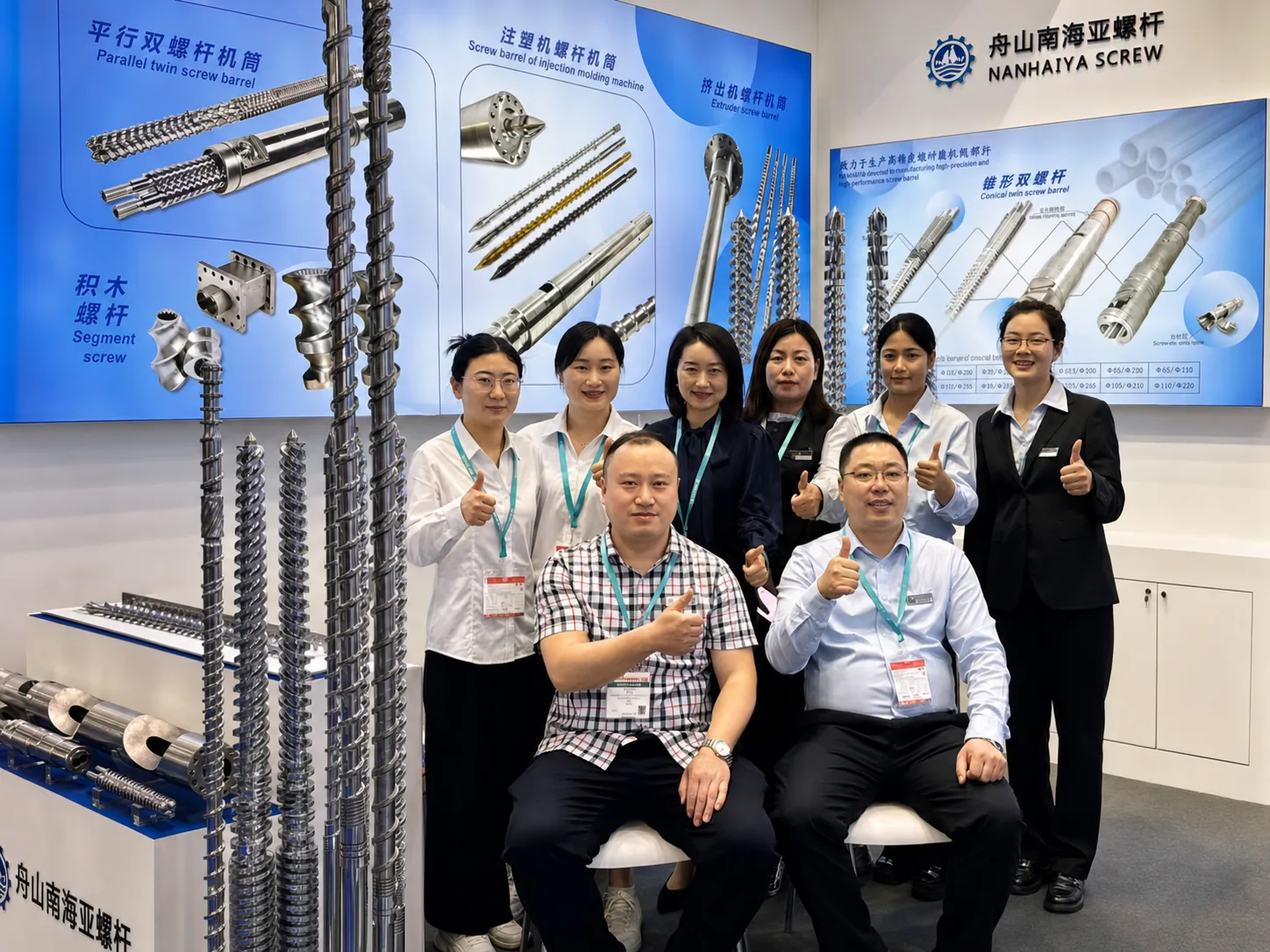
Related Articles
More insights on screw barrel technology and plastics processing.
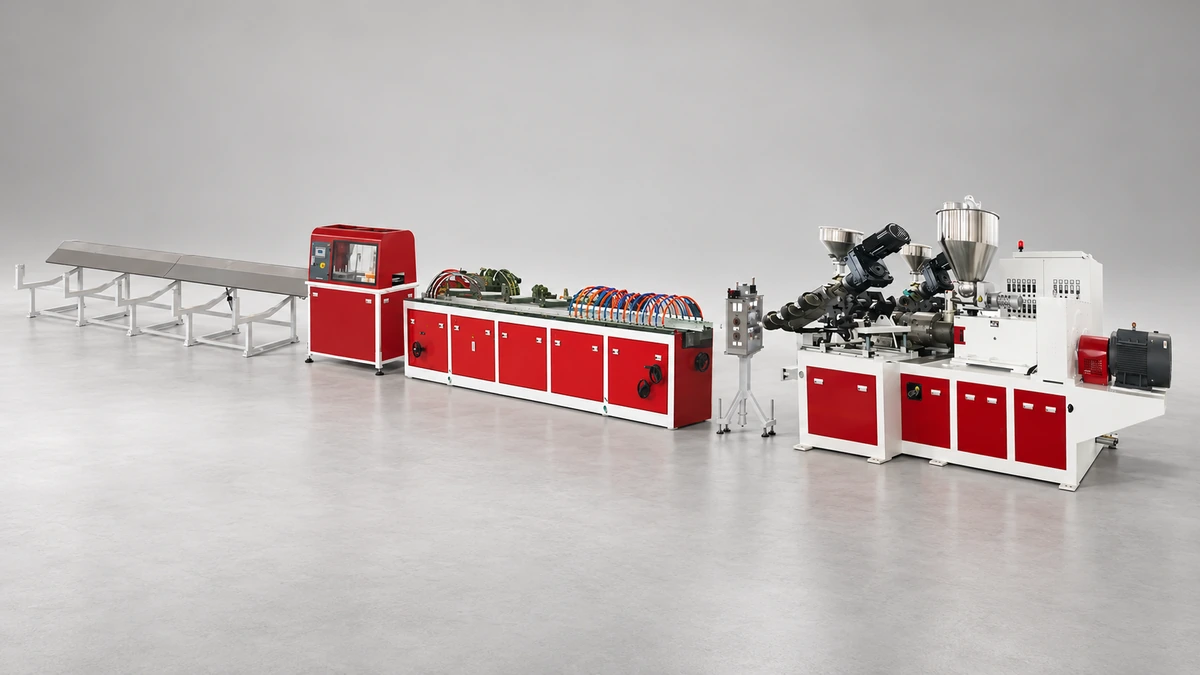
PVC Window Profile Making Machine Demystified: Resin In, Frames Out
Nov 3, 2026
Learn how a PVC window profile making machine works — from extruder configurations and downstream equipment to factory layout, maintenance, and buyer selection tips.
Read Article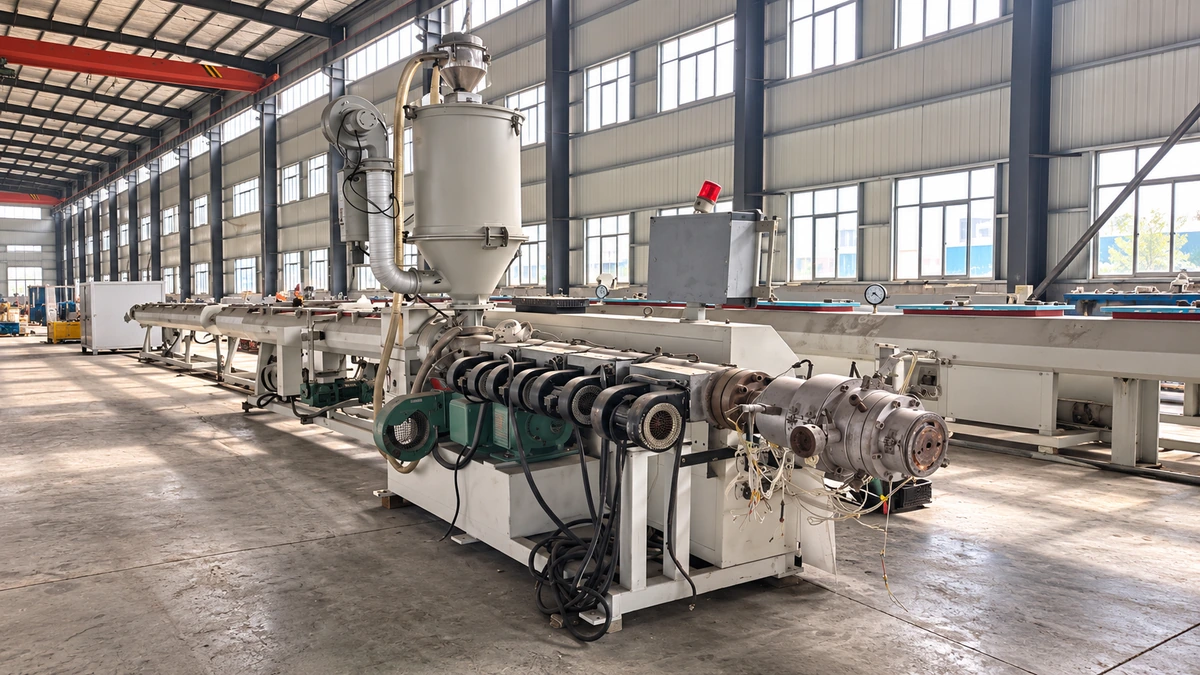
HDPE Pipe Extruder Machine: What Most Buyers Learn Too Late
Nov 3, 2026
Learn how HDPE pipe extruder machines work, compare single vs twin screw types, decode key specs, and get actionable maintenance tips to cut costs and boost output.
Read Article
PET Hydrolysis: Recycle Plastics Or Ruin Them—Chemistry Decides
Nov 3, 2026
PET hydrolysis breaks ester bonds into TPA and ethylene glycol. Learn the chemistry, acid vs alkaline vs neutral methods, enzymatic advances, and prevention tips.
Read ArticleLooking for something else?
Search by material, symptom or product and jump straight to the relevant page.
These are navigation suggestions based on keyword matching — not a quotation, not a delivery commitment, and not a substitute for engineering review. Final specification is confirmed by our engineers against your drawings and processed material.
Need help with screw barrel selection?
Share your machine model, processed material and application. Our team can help with pricing and technical support.